Author: Azur Ekić
Earth. Water. Fire. Air. Ether.
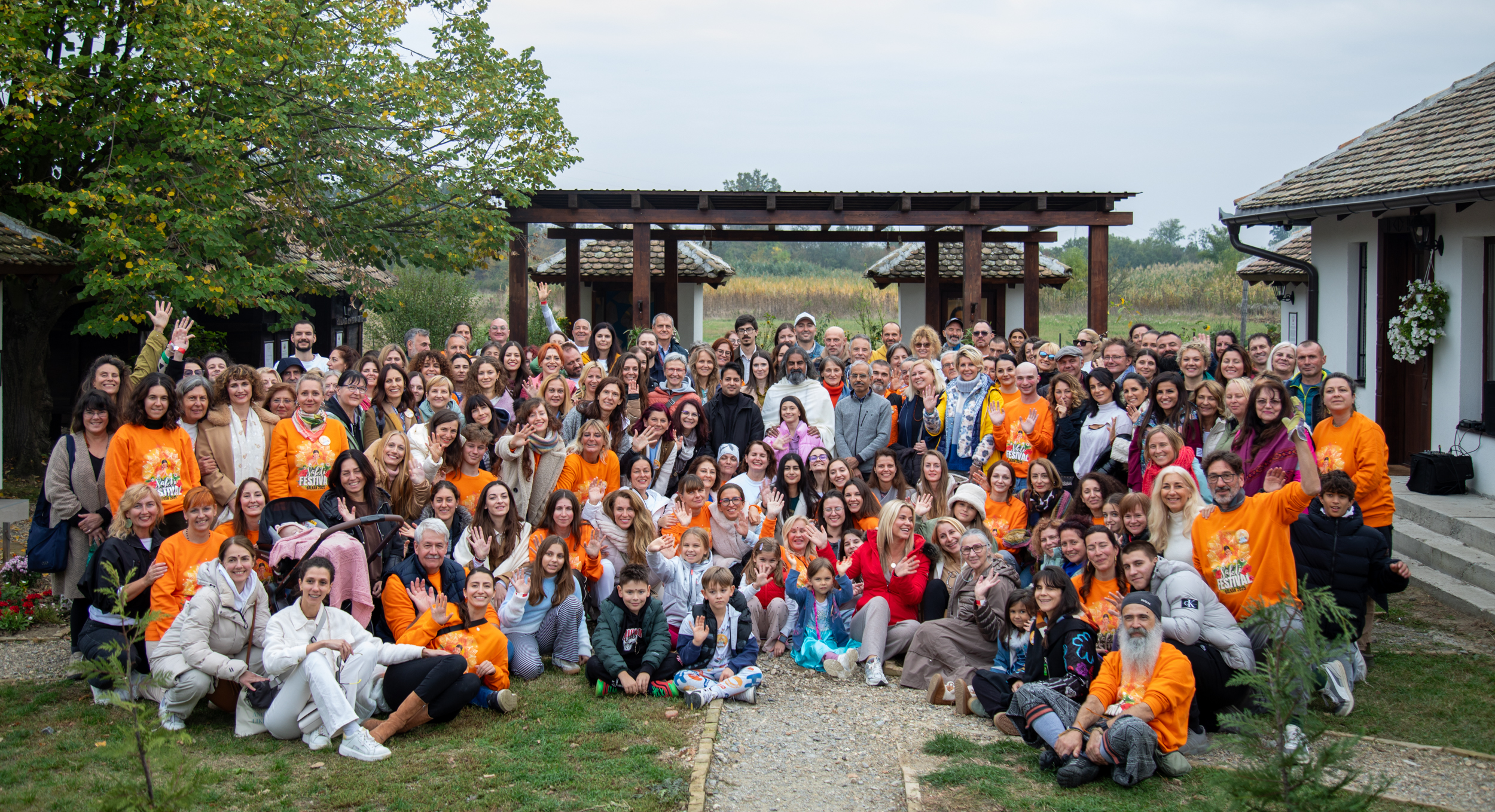
Structured across five days and attended by more than 300 participants onsite and online, Shakti Festival was not conceived as a conventional spiritual gathering. It was designed as a lived process, an elemental journey guiding participants through distinct inner movements aligned with nature and consciousness.
Inspired by Mohanji and presented as the first festival of its kind in the Balkans, Shakti was built around one clear intention: transformation through direct experience.
In an interview with organizers Jovan Đoković (Mohanji Foundation Serbia) and Natalija Mejandžijeva (Mohanji Foundation Macedonia), we explore how the festival unfolded, what shaped its structure, and why its impact extended beyond the five-day program.
The Awakening Times: What was the fundamental idea behind Shakti Festival, and how does it differ from other spiritual festivals?
Shakti Festival Organizers: Inspired by Mohanji, Shakti Festival was envisioned as a purifying journey through the five sacred elements: earth, water, fire, air, and ether. Each day centered on one element, inviting participants to activate and strengthen that dimension within themselves, reconnect with their inner power, and explore deeper layers of their being.
What distinguishes Shakti is its structured depth. Rather than offering isolated workshops or inspirational segments, the festival unfolded as a coherent inner process. Participants moved through transformation element by element, in continuity rather than fragmentation.
The Awakening Times: Approximately how many people participated?
Shakti Festival Organizers: More than 300 participants joined the festival, both onsite and online. The hybrid format extended its reach beyond the Balkans to an international audience.
Participants engaged in ceremonies, satsangs, guided meditations, workshops, and interactive sessions, forming an immersive experience that maintained continuity across all five days.
The Awakening Times: How many facilitators and collaborators were involved?
Shakti Festival Organizers: A diverse and carefully selected team shaped the festival’s multidimensional character.
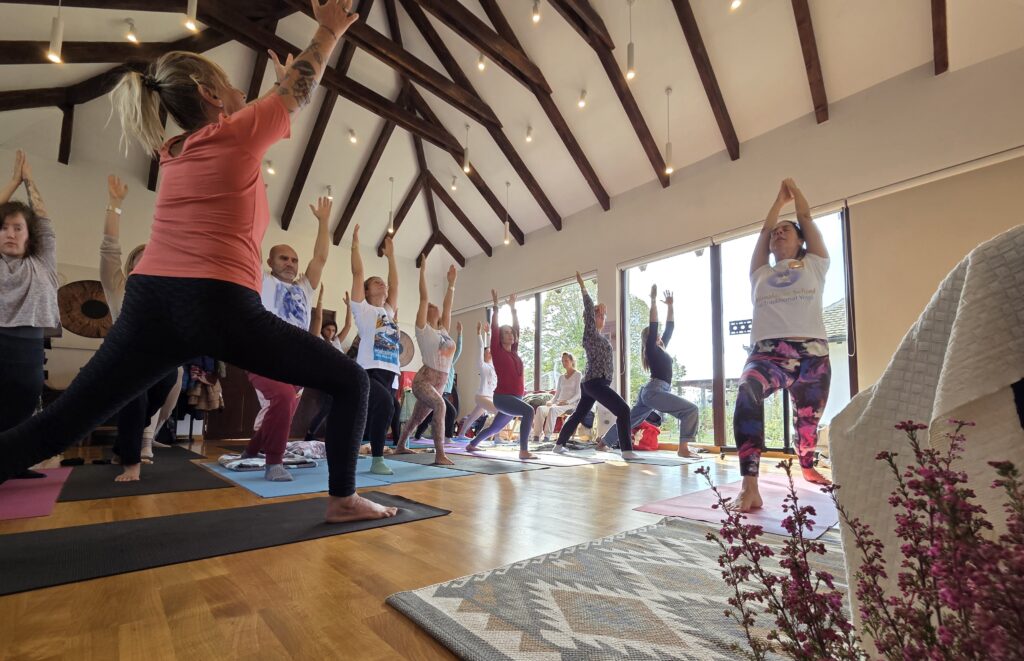
Yoga, Pilates, and Astro Life Coaching with Mateja Erzan activated physical awareness and energetic alignment. Conscious Dancing with Devi Mohan encouraged embodied connection. Spiritual Somatic Work with Ilina Vedran and public speaking guidance by Dr. Danijela Pantic addressed inner and expressive blocks.
Healing modalities included a gong bath led by Milja Jovanovic and practical insights from Chinese medicine shared by Dr. Ana Zikic. The principle of Ahimsa (non-violence) was highlighted through Veganluk’s presentation, while live music by Hearts Liberated and Lotos Band enriched the atmosphere.
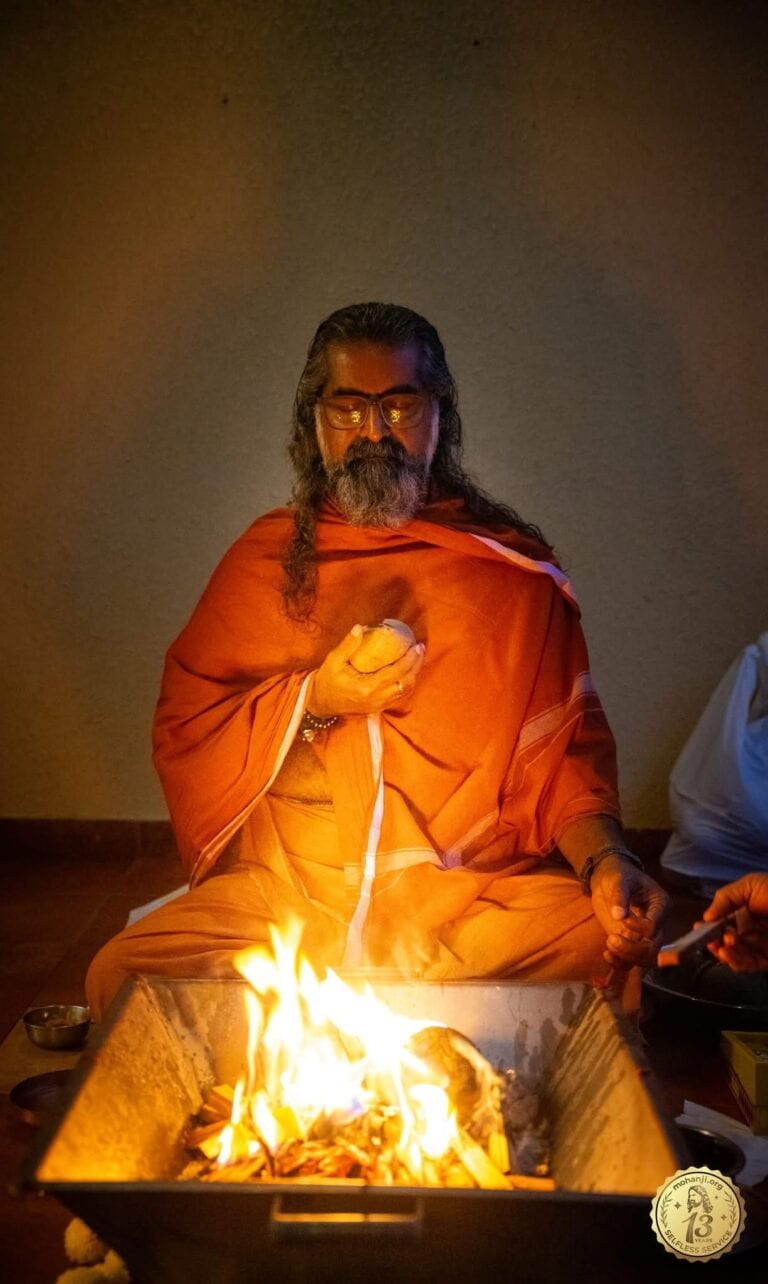
Mohanji led satsangs, chanting processes, and conducted the sacred Homa fire ritual, anchoring the festival in lineage and ritual depth.
Together, the team guided participants across physical, emotional, intellectual, and spiritual dimensions.

The Awakening Times: How did you select collaborators?
Shakti Festival Organizers: Selection was guided by alignment. We sought individuals whose work genuinely reflects the festival’s purpose and whose presence resonates with its elemental structure.
Authenticity and depth were essential. Each facilitator contributed not only professional expertise but personal integrity, ensuring coherence throughout the entire experience.
The Awakening Times: Why were the elements central to the program?
Shakti Festival Organizers: The festival’s structure was inspired by Mohanji and built around the five sacred elements. Each day invited participants to explore one element through guided processes, rituals, movement, and reflection, while simultaneously connecting with the five koshas, the layers of human existence.
The elements mirror both nature and the human inner architecture. Fire held particular significance as the only element that cannot be contaminated. It represents purification, transformation, and spiritual strength. Through the Homa ritual, participants symbolically released what no longer served them, creating space for clarity and renewed direction.
The framework united ancient wisdom with contemporary life in one integrated design.
The Awakening Times: Did participants respond differently to the elements?
Shakti Festival Organizers: Yes. Individual responses reflected personal temperament and life circumstances. Some felt deeply stabilized by the earth element. Others experienced emotional flow and release through water. Many described purification and relief during the fire rituals.
The Homa ceremony often intensified these experiences, facilitating visible emotional release and inner clarity.
The Awakening Times: Which parts of the program generated the strongest response?
Shakti Festival Organizers: The Homa ceremonies and chanting processes drew particularly strong engagement, as did satsangs with Mohanji. Participants frequently described these as moments of collective intensity and unity.
Workshops integrating movement, meditation, and music also left lasting impressions. The defining feature, however, was the depth of participation, the collective energy was palpable throughout.
The Awakening Times: Were there moments that deeply moved participants or organizers?
Shakti Festival Organizers: Several participants reported unexpected emotional release during chanting and fire rituals, describing it as a dissolving of long-held burdens.
It was especially moving to witness individuals who arrived reserved gradually open, connect, and express gratitude for the supportive environment. For us as organizers, observing these inner shifts reaffirmed the festival’s purpose.
The Awakening Times: Is there a story that remains especially memorable?
Shakti Festival Organizers: One participant arrived feeling overwhelmed by personal challenges. During the fire ritual, she experienced what she later described as fear giving way to trust. Afterward, she reported feeling lighter, grounded, and ready to make long-delayed decisions.
Families attended together as well, some members initially skeptical. Yet even among them, unexpected emotional openness emerged. These experiences illustrate how transformation continued beyond the festival’s closing.
The Awakening Times: How would you describe the festival to someone who has never attended such an event?
Shakti Festival Organizers: Shakti Festival is not something to observe; it is something to enter fully.
It is a journey of release, inner alignment, harmony with nature, and movement toward truth and the Divine. Each participant’s experience unfolds uniquely, guided by their readiness.
The Awakening Times: Did the festival leave a lasting imprint?
Shakti Festival Organizers: Yes. For many, Shakti marked a turning point. Participants reported shifts in priorities, heightened self-awareness, and greater inner stability.
The sense of community established during the festival continued beyond the five days, extending into ongoing connection and shared purpose.