Revival of a Sacred Confluence in Kerala
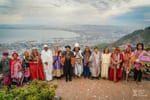
Gathering Draws Tens of Thousands to the Bharathapuzha
Author: Lea Kosovac

The Awakening Times: Thirunavaya has long been revered as Divya Desams (Sacred Abode). How would you describe its spiritual continuity across centuries?
DEVADAS AC: Located on the banks of the Bharathapuzha River, Thirunavaya has long been a spiritual hub for Kerala. It has blended with local customs, pilgrimage circuits, and ancestral rites, embedding the temple deeply into community life.
Unlike monuments that remain historical relics, Thirunavaya continues as a living temple. Devotees still visit seeking blessings, performing rituals, and participating in festivals. This living engagement sustains spiritual continuity more than architecture or history alone.
TAT: Traditions speak of Nava Yogis (Nine Yogic Sages) sanctifying this land. What does their presence symbolise in today’s spiritual context?
DEVADAS AC: In many sacred traditions, the Nava Yogis are regarded as enlightened beings who sanctified the land through their tapas (austerity), wisdom, and divine realization. In today’s spiritual context, their presence symbolizes several profound truths.
The Nava Yogis remind us that true spirituality is timeless. Just as the Bhagavata Purana describes realized sages who transcend worldly limitations, their presence signifies that higher consciousness is not confined to any era, it is accessible even today.
The Nava Yogis are often associated with diverse approaches to truth, devotion, knowledge, action, and meditation. Their collective presence represents harmony among spiritual paths rather than division.
TAT: Some spiritual traditions associate the presence of the Nava Yogis with the principle of Guru Tattva, often linked to Lord Dattatreya. Is there a contemplative or lineage-based connection here worth reflecting upon?
DEVADAS AC: In the Bhagavata Purana (particularly in the dialogue with King Nimi), the Nava Yogis appear as realized beings who speak from direct experience of Truth. They do not claim authority, they radiate it.
Guru Tattva is not confined to one body. It expresses itself through realized beings across time. The nine can symbolize completeness — multiple rays from one sun. Thus, the Nava Yogis can be seen as functional expressions of the same Guru consciousness that traditions identify with Dattatreya.
TAT: Many sacred gatherings follow a 12-year rhythm linked to Jupiter’s movement. How does this cosmic alignment deepen the meaning of Mahamagha?
DEVADAS AC: The 12-year rhythm linked to Jupiter (Guru / Brihaspati) is deeply symbolic in Hindu sacred timekeeping. In Vedic cosmology, Jupiter represents wisdom, dharma, expansion, and the Guru principle. Its orbital period of roughly 12 years becomes a sacred cycle of renewal, both cosmically and spiritually.
When this celestial rhythm converges with Mahamagha, the meaning deepens significantly. It becomes not merely a festival, but a cyclical moment of collective purification and renewal aligned with cosmic order.
TAT: The participation of sadhus under the guidance of Juna Akhada brought a distinct spiritual energy. What does the presence of ascetics signify in such gatherings?
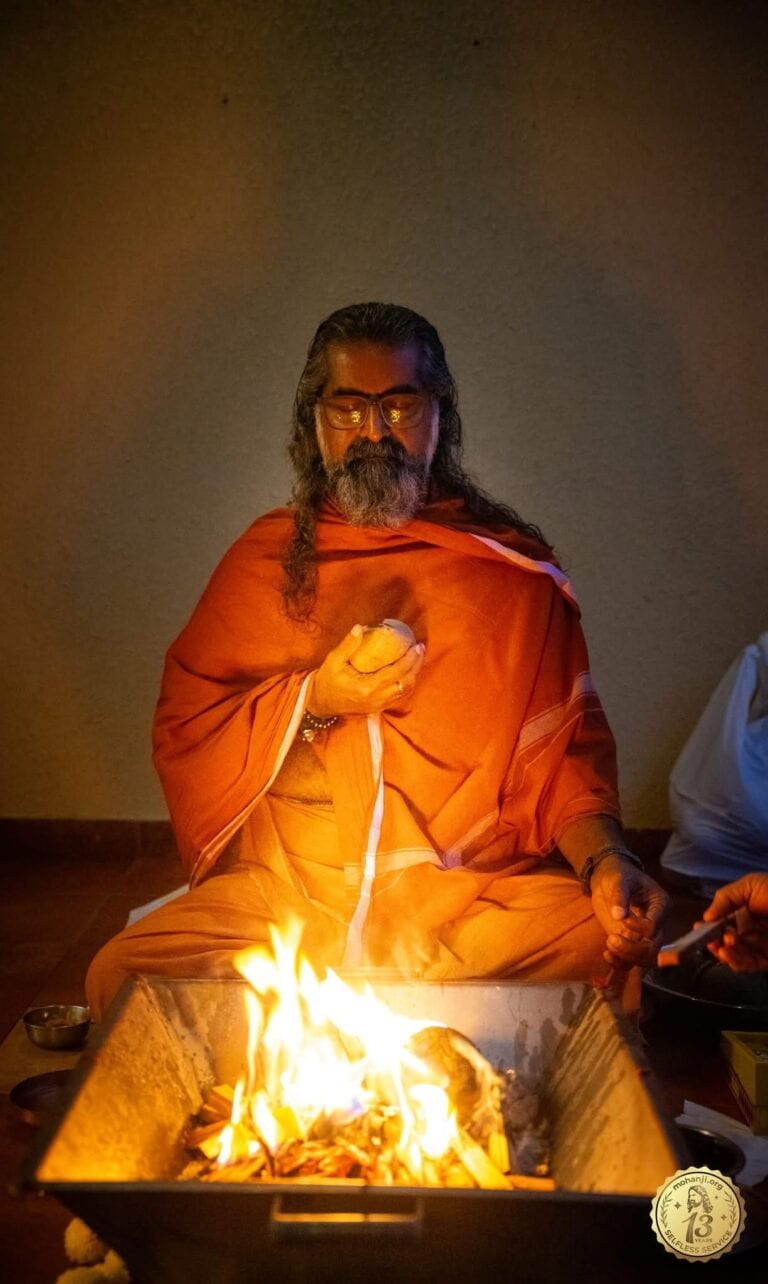
DEVADAS AC: Their participation is not merely ceremonial; it carries symbolic, energetic, and lineage-based significance. The ichha shakti (willpower) worked powerfully during this event. Though there were restrictions from Government departments, the sadhus’ collective will prevailed, and permission was ultimately granted.
The presence of ascetics signifies renunciation, tapas, and the living continuity of parampara. Their participation energizes the spiritual field of such gatherings.
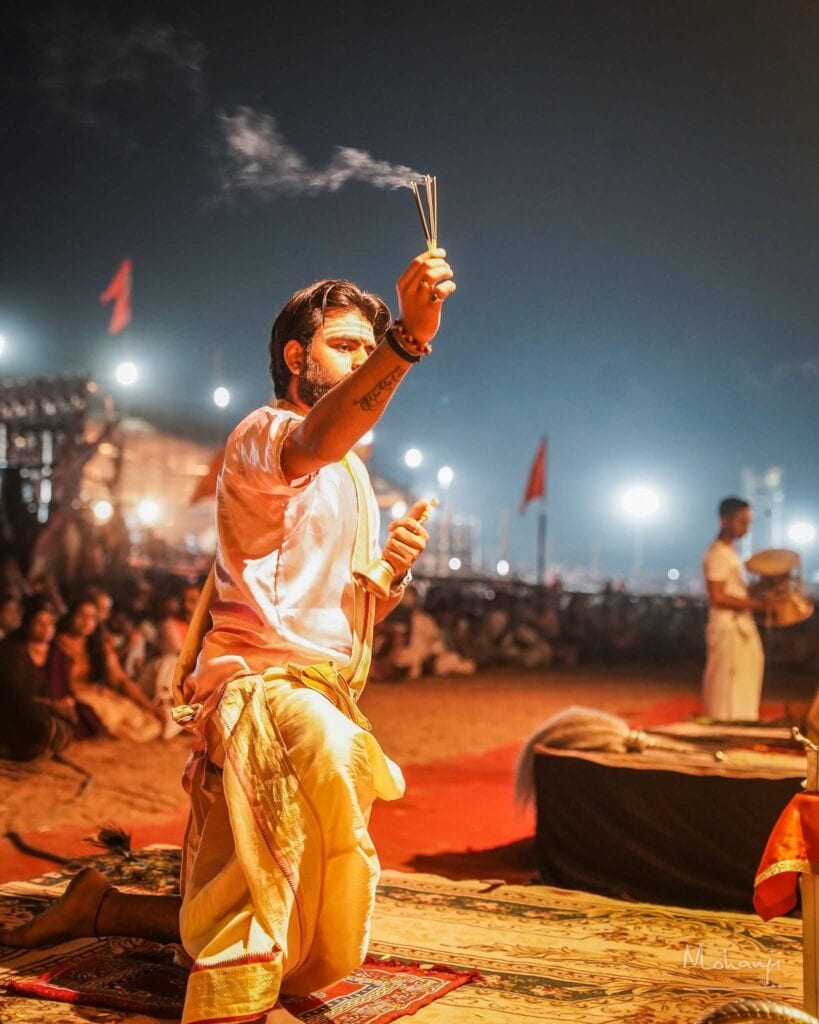
TAT: The Nila Aarti became a defining moment of the festival. With priests from Varanasi supporting the ritual, what did this North–South spiritual collaboration represent?
DEVADAS AC: The Ganga Aarti is performed regularly in the north, yet many people from South India are unaware of how this ritual is conducted in its traditional, sacred form. Additionally, many South Indians are unable to travel to the banks of the Ganga to witness this sacred offering.
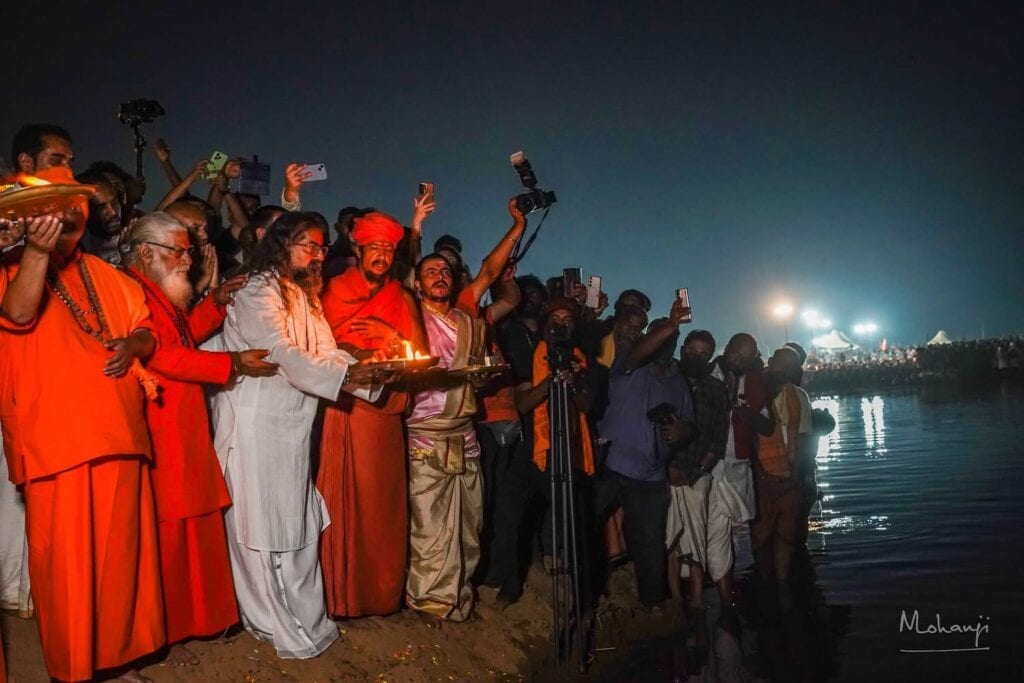
Through Mahamagham, this became possible locally. The ritual was made accessible, and people began to understand its value more deeply. This North–South collaboration symbolized spiritual unity beyond geography.
TAT: What was the involvement of Mohanji Foundation in supporting the Mahamagha Mahotsavam, and how did it align with its vision of collective upliftment?
DEVADAS AC: Mahamandaleswar Swami Anandavanam requested Mohanji to sponsor the Nila Aarti. Mohanji wholeheartedly agreed and made the necessary arrangements. A group of priests from Varanasi was made available for the ritual.
The Nila Aarti became a major highlight of the Mahamagham event. Attendance grew from thousands to later lakhs (hundred thousand) of people across Kerala.
TAT: Maha Seva through Ammucare Charitable Trust was an important dimension of the event. Could you share the scale of service initiatives and their significance?
DEVADAS AC: Anandavanam Swamiji initially planned to serve annaprasadam (sacramental meal) to 500 people at a time for breakfast, lunch, and dinner. Accordingly, the caterers procured raw materials for this scale.
However, it was a great surprise when the crowd was three to four times higher than expected. During the last four days, turnout was unprecedented, with crowds ranging between 40,000 to 60,000 people.
TAT: Finally, what does this revival mean spiritually for Kerala, and what should a pilgrim seek when attending future Mahamagha gatherings?
DEVADAS AC: Mahamagha gatherings are not private pilgrimages; they are collective tapas. When communities assemble for yajna, anna-dana, and satsang, the spiritual vibration uplifts the land itself. It becomes a renewal of social harmony and shared responsibility.
The external snanam (bath) in the sacred river symbolizes inner purification. One should consciously release resentment, ego, and past burdens.
Mahamagha is sustained by selfless service, feeding pilgrims, assisting elders, and supporting the temple. Seva anchors spiritual experience in humility.
Spiritually, this revival is an invitation. It calls Kerala to remember its tapasya heritage and invites each pilgrim to become a carrier of that light. When Mahamagha becomes not merely an event but a personal awakening, then the revival becomes complete.