Restoring Sacred Continuity
Author: Leah Kosovac
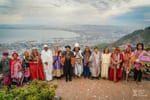
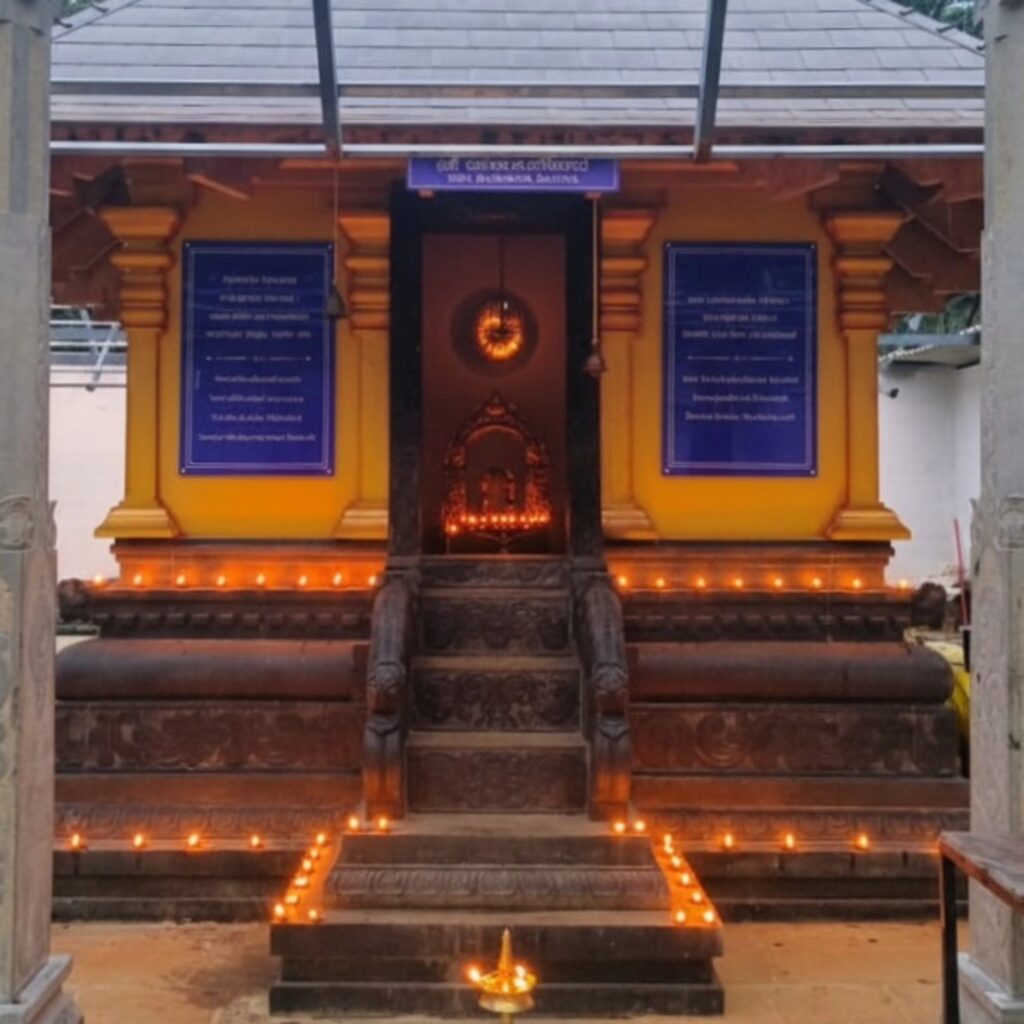
On 28 May 2025, a newly constructed temple complex in Kundurkkunnu, Kerala, was consecrated as the kuladevata (ancestral family deity) temple of Mohanji’s lineage. Named the Pathirisseri Dharmasastha Temple, Kundurkkunnu, the structure is new; the deities were respectfully relocated and ritually reinstalled so that their worship could be maintained daily within Kerala’s traditional tantric and agamic (scripturally codified temple) framework. The ceremony formalized the transition to a stable institutional setting capable of sustaining uninterrupted ritual continuity.
Mohanji’s family deity, Dharmasastha, had been located in Muttichur in Thrissur district, Kerala, approximately 200 years ago. Over time, the Pathirisseri family moved away from that region, and circumstances arose in which regular pujas (ritual worship) to the family deity could no longer be maintained.
To understand the will of the deity regarding relocation, Mohanji initiated an astrological consultation. The findings indicated that Dharmasastha consented to move to a new location. Following this confirmation, Mohanji acquired land and constructed a temple to install the clan deity, the associated family deities, and the Nāga Devata (serpent guardian deity).
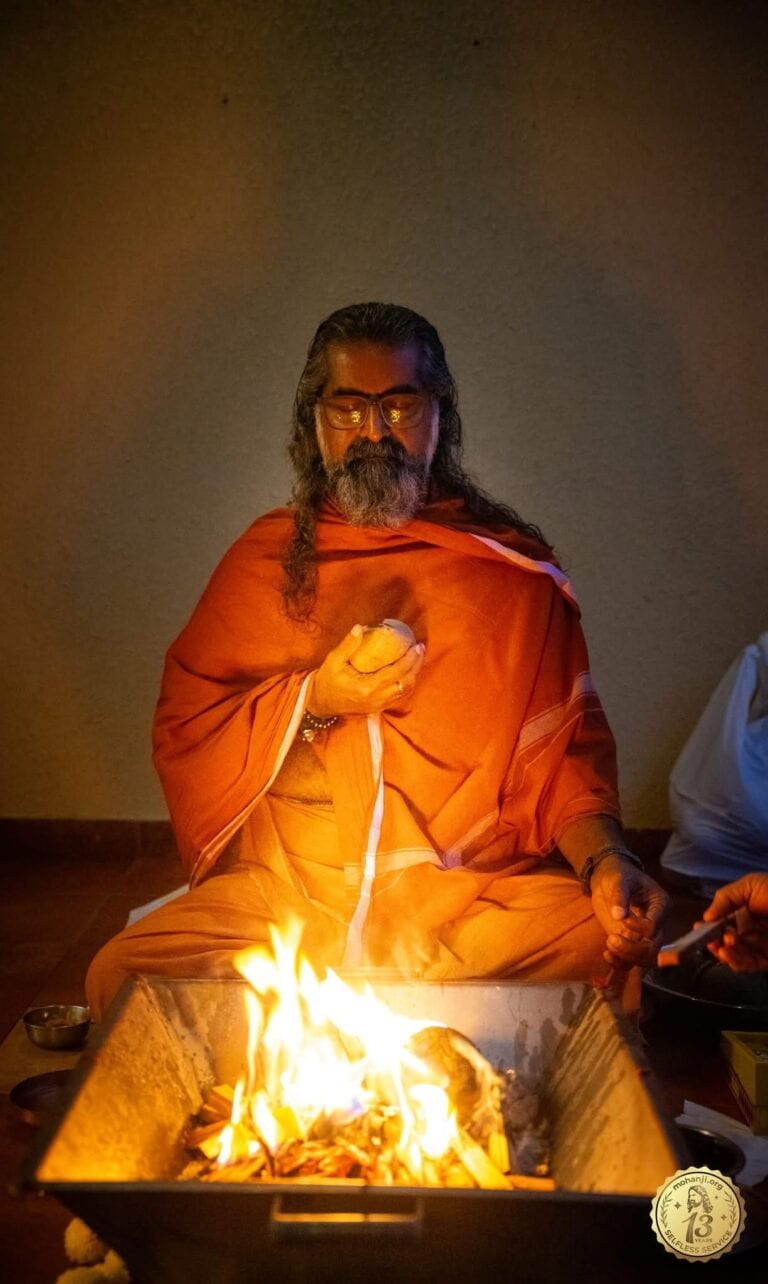
The consecration ceremonies were conducted under the guidance of the temple Thantri (chief ritual authority), Sri Andaladi Parameswaran Namboothiripad. From 22 to 28 May 2025, elaborate rituals were performed in strict adherence to established Kerala tradition. With Mohanji’s grace, the temple was opened to the public on 29 May. Since then, regular poojas have been maintained without interruption. Astrological findings further affirmed that Dharmasastha extends blessings to the Pathirisseri family and to all who visit or offer worship at the temple.
Traditional Kerala Configuration
The principal deity installed is Dharmasastha, regarded in tradition as the son born of Lord Shiva and Lord Mahavishnu (in the form of Mohini), embodying the union of protective and sustaining principles. Installed in a separate sanctum beside Dharmasastha are the family deities:
Durga
Palazhi Thevar Vishnu (Sankalpam Narasimham)
Palazhi Bhagavathi (Bhadrakali)
Ganapathi 1
Ganapathi 2
Hanumanji
Venna Krishnan
Shivalingam
Salagramam (Vishnu)
This configuration follows a traditional Kerala pattern in which the clan deity remains central, while associated family deities are installed in designated sanctums within the same sacred complex.
A kuladevata (ancestral lineage deity) is the presiding spiritual guardian of a family line. In many Hindu families, particularly in South India, this relationship is not devotional preference but hereditary obligation. The deity is regarded as protector of the family’s karmic continuity, its relationship to land, and its welfare across generations. Worship is sustained through daily ritual, seasonal observances, and disciplined transmission.
Historically, such worship often took place within ancestral homes or modest shrines. Over time, geographic dispersal and changing lifestyles weakened regular observance. The establishment of a dedicated temple at Kundurkkunnu provides the structure necessary for daily worship in accordance with Kerala’s codified tantric and agamic traditions.
Nāga Devata and the Ethics of Coexistence
A defining feature of the temple complex is the installation of the Nāga Devata in a separate shrine situated in the Eesanakon (north-east sacred quadrant) of the main deity, in accordance with Kerala temple principles. To an external observer, serpent worship may appear esoteric. Within Kerala, it is foundational.
For centuries, traditional households preserved sarpa kavus — sacred serpent groves intentionally left uncultivated within domestic land. These groves functioned both as ritual sanctuaries and ecological preserves. They expressed a worldview in which land was inhabited under covenant rather than possession.
Regional tradition attributes the formation of Kerala to Parashurama, who is said to have reclaimed the land from the sea and entrusted it to human settlement. Embedded within that narrative is a principle: serpent guardians, understood as embodiments of fertility, vitality, and ancestral continuity, were to be honored as co-custodians of the land.
Whether approached as mythology or lived tradition, the principle is clear: settlement requires reciprocity.
In Kerala’s symbolic language, Nāgas represent regeneration, lineage memory, and the coiled potential described in yogic terminology as kundalini (latent spiritual energy). The Pathirisseri Dharmasastha Temple maintains monthly Nāga pooja on the Ayilyam (Ashlesha) star according to the Malayalam calendar, sustaining this dimension of reverence in contemporary practice.
Devotees who complete the forty-one-day vrata (disciplinary observance) associated with Dharmasastha worship — regulating conduct, diet, and prayer — may place their malas (prayer garlands) near the Nāga shrine at its conclusion. The act returns personal austerity to ancestral ground, reconnecting inner discipline with lineage soil.
Custodianship in Practice
Since consecration, the temple’s ritual cycle has been maintained through prescribed daily worship. Kerala’s temple culture is defined by precision rather than spectacle. Mantras, pujas, offerings, and sequence follow prescribed order; continuity depends on accuracy.
At Kundurkkunnu, the relocated and ritually reinstalled deities are now served through daily worship in accordance with established Kerala tradition. Lamps are lit. Offerings are made. Aratis (ritual light offerings) are performed. Nāga poojas are observed on their designated days. Devotees participate through offerings and sponsorship of ritual occasions.
Many members of the extended Mohanji family regularly offer poojas and rituals at the temple.

Responsibility as Structure
The temple reflects a principle aligned with teachings often emphasized by Mohanji: responsibility toward one’s actions, one’s karmic inheritance, and one’s rightful place within a larger order. Spiritual maturity, in this understanding, does not dissolve lineage; it assumes it consciously and stabilizes it.
By institutionalizing daily worship of his kuladevata, Mohanji translates that principle into structure. Responsibility is not an abstraction; it is enacted through continuity. Transcendence does not negate inheritance; it clarifies and dignifies one’s relationship to it.
In contemporary India, rapid urbanization and global mobility have distanced many families from the ritual frameworks that once anchored domestic life. The restoration of a functioning kuladevata temple therefore represents more than private devotion; it signals the deliberate preservation of a civilizational pattern in which lineage, land, and spiritual responsibility remain structurally linked.
For an international readership, the significance of the Pathirisseri Dharmasastha Temple lies in what it demonstrates about traditional Hindu life: spirituality is sustained not only through philosophy, but through rhythm, obligation, and care.
At Pathirisseri, that structure now stands.
The sanctum opens each morning.
Mantras are recited.
Pujas and offerings are performed in prescribed order.
The serpent shrine receives its rites.
The lineage deity is worshipped daily.
Nothing more is claimed.
The work is simply being done.
If your heart resonates with this, you are invited to become part of it, by helping complete the temple, sponsoring pujas in your name or for your family, or supporting the simple daily necessities that keep the sanctum alive, such as oil for the lamps and sacred offerings. Those who wish to contribute may connect with the temple through its Instagram or Facebook pages for further details.