Authors: Lea Kosovac & Monika Nedić
Inside Nairobi’s exhibition halls, the 6th International Trade & Investment Summit moved with familiar momentum: sector briefings, cross-border proposals, SME showcases, and conversations about regional expansion. Delegations navigated between booths discussing manufacturing, logistics, infrastructure, and capital flows, while Kenya’s role as a commercial gateway to East Africa framed much of the dialogue.
Trade and investment summits are designed to accelerate economic exchange. They rarely pause to examine the ethical foundations that sustain long-term growth.
This is where the Mohanji Foundation entered the room.
A Values-Driven Organization in a Market-Focused Space
Registered and active across multiple countries, Mohanji Foundation operates globally with a mandate rooted in non-violence, compassion, and responsible action. Its work spans structured volunteering, environmental initiatives, community support programs, and humanitarian outreach through affiliated platforms such as ACT Foundation.
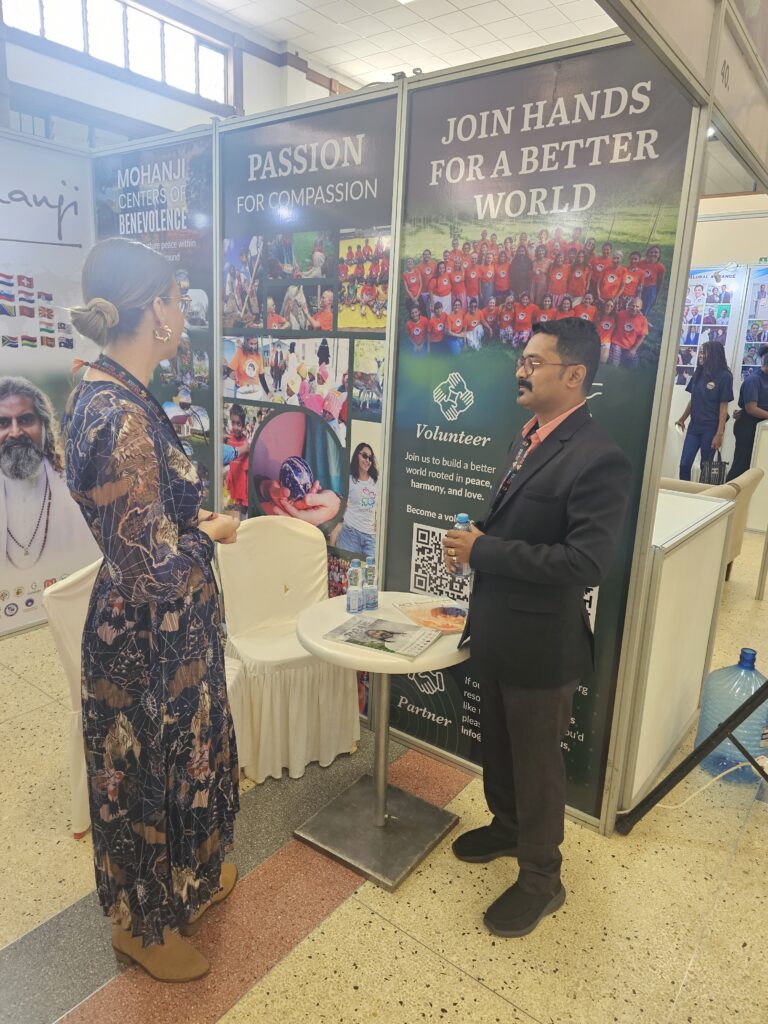
At a summit centered on investment vehicles and trade corridors, the Foundation did not present a product, technology, or commercial model. Instead, it introduced its framework of service — mobilizing volunteers, supporting grassroots initiatives, and building partnerships grounded in shared responsibility.
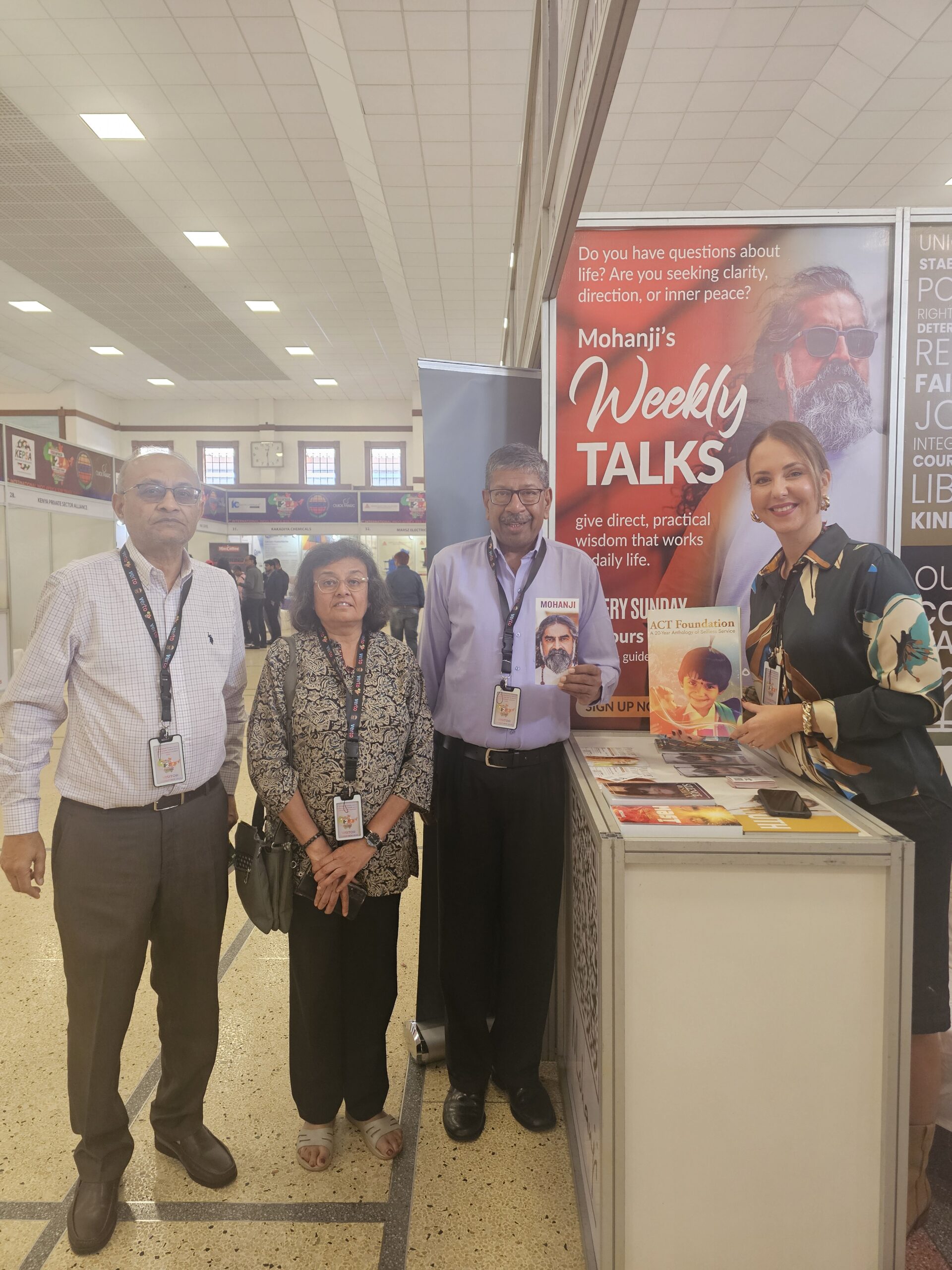
The contrast was noticeable but not disruptive. Positioned among commercial exhibitors, the Foundation’s booth drew more than 200 visitors over the course of the summit, including entrepreneurs, NGO representatives, business leaders, and visiting dignitaries. More than 60 individuals expressed interest in continued dialogue or structured collaboration.
Rather than framing its presence as expansion, the organization used the platform to establish initial relationships within Kenya’s professional landscape, a strategic entry point into networks that typically require extended groundwork.
Why the Setting Matters
Kenya’s development trajectory is frequently described in terms of industrial growth, SME expansion, digital innovation, and regional trade integration. Summits like this function as meeting points between policy ambition and private-sector execution.
By participating in this environment, Mohanji Foundation situated its work within that broader development framework. The proposition was not that economics should give way to humanitarianism, but that the two operate best in alignment.
In discussions with visitors, representatives outlined how ethical leadership, volunteer engagement, and community initiatives can complement corporate responsibility strategies and institutional development objectives. No formal agreements were announced during the summit. The significance lay instead in access, direct interaction with stakeholders who influence regional direction.
Media conversations and independent digital coverage extended visibility beyond the exhibition floor, but the primary outcome remained relational: introductions, exchanges, and exploratory dialogue.
Beyond the Exhibition Hall
The Kenya visit extended beyond the summit venue.
During the same period, ACT Foundation volunteers conducted a seva initiative in Deep Sea, one of Nairobi’s informal settlements. Working alongside a local community kitchen that prepares daily meals for approximately 300 children, the team supported and served a warm lunch to more than 100 children.
There was no stage, no banner, no formal address. Volunteers stood behind large cooking pots, filling plates in steady rhythm as children queued patiently in the afternoon heat. Conversations unfolded quietly, names exchanged, brief smiles shared, hands washed and plates passed forward. The scale was modest; the continuity with the Foundation’s global service model was consistent.
The shift from trade summit to community kitchen underscored a central message: institutional engagement and grassroots action are not competing priorities.

Tangible Outcomes
From a reporting standpoint, the immediate results were clear:
200+ booth engagements
60+ prospective collaboration contacts
Direct introductions to senior business and civic stakeholders
Regional media exposure
On-ground humanitarian activity in Nairobi
Less visible, but potentially more consequential, was the establishment of a Kenyan foothold within professional networks. The summit served as a formal entry point; the community outreach reinforced credibility.
What Comes Next
Whether the relationships initiated at the summit translate into sustained collaboration will depend on follow-through in the months ahead. Future participation in regional platforms remains under consideration, contingent on structured partnerships.
For now, the Mohanji Foundation’s presence at the 6th International Trade & Investment Summit signaled a deliberate effort to introduce a values-based perspective into a space traditionally defined by economic metrics.
In Nairobi, amid discussions of growth projections and investment flows, one exhibitor advanced a quieter proposition: that durable development depends not only on capital, but on conscience.