Author: Isidora Bugarski
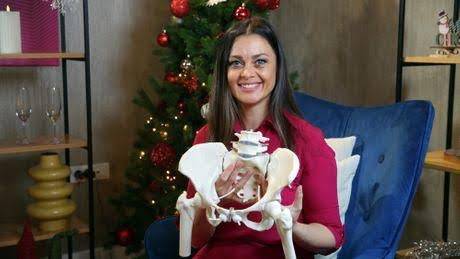
Ivana Veličkov, a midwife by profession, spoke with EBC Balkans about:
Natural home birth,
The role of a birth assistant,
The role of the father during childbirth,
Water birth and birth outside of water,
And her own vivid personal experiences.
Education
Ivana’s education includes both formal and informal learning. Her formal education consists of secondary school training as a midwife and university studies in midwifery, including a master’s degree. She attended the Academy of Educational and Medical Vocational Studies in Ćuprija, as it supports natural childbirth, which is why she specifically chose that institution.
Her informal education took place mostly in Europe—in Austria, Germany, Slovenia, Hungary, and other countries—where she learned various techniques to assist women during childbirth. For example, she trained in techniques for turning breech babies, pregnancy exercises, infant massage, and water birth in Budapest. She is the only certified midwife for water births in Serbia. Out of love for midwifery, she worked to gain the broadest possible education, which she now implements in her practice. She also discarded certain theoretical approaches that did not prove effective in practice, refining her selection of techniques to use with clients.
Practical experiences gained during education
“I don’t even know where to begin, but recently, in the hospital in Ćuprija, I had an experience called ‘quarantine practice.’ This is a type of training where you spend seven days locked inside the maternity ward—you sleep, eat, and shower there. It was an incredible experience.
One particularly memorable moment happened when a fellow midwifery student, who was on this training with me, had a retroverted uterus. She trusted me to perform a manual adjustment, which is a chiropractic treatment. A few days ago, she called me overjoyed to share that, according to her gynecological ultrasound, her uterus was no longer tilted!
This kind of knowledge is what I pass on to my personal birth assistants, and it brings me immense joy to share it. Natural childbirth and its crucial aspects are rarely discussed, and I’m grateful to help spread awareness and expertise in this field.”
On the Practice of Turning a Breech Baby
One of the techniques I frequently apply is the practice of turning a breech-positioned baby. This involves inversion exercises—static positions that can be performed even by women whose doctors have advised against physical exercise.
One of my greatest successes happened in Niš, where we managed to turn a baby that was in a transverse position. The mother had a bicornuate uterus, a heart-shaped uterus, which made it impossible for the baby to assume a vertical position—it kept settling into a horizontal lie. Doctors had advised her that a C-section was the only option. However, through specialized exercises, we successfully turned the baby into the correct position. I cannot describe the joy of that mother—she was overwhelmed with happiness knowing she would be able to have a natural birth, which is the healthiest option, rather than a cesarean section.
My practice includes many elements related to women’s reproductive health, childbirth, and postpartum care.
What Are the Advantages of Home Birth Compared to Standard Hospital Births?
The difference is immense—it affects the mother’s health, the baby’s health, and continues to impact the child’s immunity and emotional bond with the mother throughout life. Natural birth has numerous aspects that make it beneficial.
One of the most valuable experiences in my life was my home birth training in Slovenia with a licensed midwife who runs a home birth practice. As part of my university training, I attended 50 home births, as my faculty approved my practice in Slovenia. This was an incredible honor because it allowed me to witness the true nature of birth—how much influence a midwife can have without medical interventions, using alternative, non-medical methods.
Transplacental Autotransfusion
One of the main reasons I advocate for home birth is the ability to achieve transplacental autotransfusion. There is a continuous circulatory exchange between the baby and the placenta. Essentially, when a baby is born, all the blood from the placenta should transfer into the baby. The mother experiences contractions that naturally push this blood toward the baby, allowing the infant to receive up to one-third more blood.
However, if the umbilical cord is cut immediately after birth, the baby is left with less blood than it actually needs—about one-third of the baby’s blood remains in the placenta. That’s why it is crucial not to clamp and cut the umbilical cord right away but to wait patiently for all the placental blood to transfer into the baby. During this process, the baby continues to receive oxygen both through the umbilical cord and by breathing through the nose, which is essential for brain development.
Another critical aspect of delayed cord clamping is that all the stem cells, immunoglobulins, red blood cells, and oxygen from the placenta transfer to the baby, strengthening its immune system and overall health.
In medical literature, obstetrics is divided into conservative obstetrics and modern obstetrics. Modern obstetrics follows standardized hospital protocols and interventions, whereas conservative obstetrics allows nature to take its course.
The primary reason I chose conservative obstetrics is precisely this natural process between the baby and the placenta, which ensures the best possible start to life.
Why Is It Important for a Baby to Pass Through the Birth Canal Instead of Being Delivered by C-Section?
The vaginal mucosa contains lactobacilli, which the baby picks up through its nose and mouth during birth. These beneficial bacteria colonize the baby’s mucous membranes, contributing to a stronger immune system.
A baby born naturally receives:
Stem cells
Oxygen
An adequate amount of blood
Lactobacilli for gut health
Following this, the most crucial next step is for the baby to receive colostrum, the first milk produced by the mother. I consider colostrum to be a natural medicine, as it contains high levels of immunoglobulins and antibodies, which are essential for building the baby’s immune system.
This process is the foundation of a baby’s natural immunity, and I strongly advise against introducing anything other than colostrum in those early moments after birth.
Giving Birth in the Forest as a Motivation for Growth and Life’s Calling
This experience pushed me toward continuous growth—both as a mother and as a midwife. The first birth I ever witnessed happened in the forests of Rovinj, and I assisted as if I had done it a million times before. In reality, I knew nothing about childbirth—I just happened to be there by chance.
I believe this was a blessing from God, arriving at the perfect moment. At that time, I was deeply questioning my life’s mission—what my role in this world was, what I was meant to give. And then, in the most extraordinary way, the answer came.
Growing up in a rural environment also played a part in shaping me. I watched sheep give birth, observed nature’s rhythms, and found it all deeply beautiful and familiar. That early connection to birth and life’s natural cycles became the foundation of my passion for midwifery.
Obstetric Violence as a Source of Strength
After my first experience assisting in birth, I became pregnant myself, hoping to go through the same natural process. However, my birth experience was entirely different—it was a hospital-led, medicalized vaginal birth, which is fundamentally different from an entirely natural birth.
Experiencing a standard hospital birth, I didn’t feel the same way as the woman who gave birth in the forest. Instead, what I went through was later recognized as obstetric violence. While this topic has gained attention, its core issue is often overlooked.
Obstetric violence occurs when a birth is progressing normally and physiologically, yet medical staff intervene unnecessarily—such as administering synthetic oxytocin without consent to speed up labor. In my case, I refused induction, yet my refusal was ignored. Women have the right to decline induction and episiotomy if their labor is progressing naturally, without complications.
What happened to me was a clear case of obstetric violence because my labor was completely normal, yet my integrity and dignity were violated. However, this experience became a source of strength.
My deepest wound transformed into my greatest power, driving me to help women give birth naturally, preserve their integrity, and reclaim their dignity.
Integrity and Courage in My Second Birth
My second birth was powerful, filled with integrity and courage. It was a true transformation into motherhood. In just a year and a half, I experienced profound mental, spiritual, and emotional growth—an extraordinary leap in every aspect of my life.
I gave birth to my first child at 23 years old and my second at 24, with only 22 months between them. This transformation was life-changing. Looking back, I am deeply grateful for my first birth experience, even though it involved obstetric violence. Without it, I wouldn’t have undergone this profound transformation, nor would I have gained the perspective to truly understand and appreciate the difference between a medicalized birth and a fully empowered, natural birth.
Third Birth – A Celebration of Grace and Joy
With my third daughter, Maja, I had another completely natural home birth, but this time it was a water birth. This experience was special because I already felt connected to her personality even before she was born. I knew she would arrive on Easter Sunday—just as I was born on Easter myself. She was born on my birthday, at home, in water, with the sound of Easter liturgy bells ringing in the background.
Since this was my third birth, and as a midwife, I decided to turn it into a celebration. I invited all my friends and said, “Come to the party! Come and see what birth really looks like!” Theory is one thing, but witnessing a birth is something entirely different. So I had a small gathering at my birth!
At one point, during a contraction break, I looked at my photographer and said,
“Please, give me the camera—I have to take a picture of you all! You haven’t taken a single photo yet, and the birth will be over soon!”
Meanwhile, the photos showed that I was already fully dilated!
This third birth was a spectacle, almost like a theatrical performance. We had officially mastered the art of natural birth!
Water Birth or Land Birth? Embrace and Accept Nature
The founder of Water Birth, Barbara Harper, is an incredibly innovative woman whose work I deeply respect. She is also an outstanding lecturer. Traveling all over the world, she trains medical professionals in the practice of water birth.
Barbara has conducted numerous studies, assembled teams of experts, and even designed and perfected birthing pools. The reason she trains medical professionals in water birth is that, when a woman is in water, doctors and midwives cannot:
Perform an episiotomy,
Administer intravenous or artificial induction,
Cut the perineum with scissors.
Essentially, she protected women in maternity wards by placing them in water.
Water birth is becoming increasingly popular. My husband, for example, was thrilled that we would be delivering our daughter in water because, as a child, he watched how Russians gave birth in water and believed it was healthy.
However, as a midwife, I took an unbiased approach, which is very important, and I discovered several weak points. One key issue is that water reduces the intensity of contractions—it actually numbs them. When contractions aren’t strong enough because the water has dulled them and relaxed the uterus, women might think, “Oh, great, it hurts less!”—but in reality, this slows labor significantly. At that pace, you might end up giving birth five days later, but you’ll still go through the same process because labor is something you must go through.
Water birth significantly slows down labor. Each woman subjectively describes her birth experience, and while some might say, “My water birth was amazing!”, a midwife could assess the situation more realistically. For example, one woman said her water birth was great, but when I asked her specifics—When did you feel the first contraction? When did the midwife arrive? When did you enter the pool?—she replied:
“I dilated 7 cm in two hours, and then it became very painful. The midwife arrived, set up the pool, and I got in. After that, it took me 12 more hours to dilate the remaining 3 cm.”
This means that without the water, she might have given birth in just 30 minutes.
On one side, modern medicine promotes epidural anesthesia, while on the other, natural birth methods—such as water birth—have also gained popularity. However, neither of these fully honors the nature of childbirth. The common goal behind both is to reduce pain.
The real essence of birth is accepting that pain. The more open we are to embracing intense pain, and the less resistance we put up (which is a principle applicable to many aspects of life), the less pain we will actually feel, and the faster we will give birth.
At this point, I hold deep respect for the natural birth process and absolutely do not want to disrupt the flow of divine creation—whether through medical or non-medical interventions. The less interference, the better. I love trying new things, which is why I chose to have my third birth in water.
The reason we choose to give birth in a squatting, kneeling, or all-fours position is that we want gravity to be an ally in the biomechanics of birth.
Our pelvis and vagina have different openings, and during labor, a rotation must occur so that the baby’s head and shoulders align properly with the pelvic inlet. Then, the baby goes through extension and, finally, an external rotation to pass its shoulders through the vagina. This means the baby undergoes:
Internal rotation
Flexion-extension
External rotation
Gravity helps facilitate this process. However, when we are in water, does gravity exist? No!
As a result, there are far more “stuck” babies in the pelvis during water births. When a baby gets stuck in water, repositioning is much harder due to technical limitations: the midwife is outside the water while the mother is inside.
Additionally, once the baby is born, it is thermally unstable. We place the baby on the mother’s chest to stabilize its temperature, but since the mother is in water, the baby continues to be splashed and cooled down, making temperature regulation more difficult.
Another issue is that lactobacillus, the beneficial bacteria the baby picks up from the birth canal, gets washed away upon exiting into the water.
On a practical level, water birth requires complex technical conditions, such as a continuous-flow water heater—since a 500-liter birthing pool cannot be filled using a standard water heater.
After observing multiple water births and noticing the same recurring issues, I asked myself:
Did our grandmothers give birth in water?
The answer is never! There is no historical record of women giving birth in water in traditional societies.
The essence of this story is to encourage women to face the pain of childbirth, to embrace it, because I am convinced that all our sins burn away in that pain. I felt spiritually the purest I have ever been—it was an unimaginable feeling of spiritual clarity. I only experienced that after my two natural home births.
WHO IS A PERSONAL BIRTH ASSISTANT?
This is a profession that I introduced in Serbia. A personal birth assistant plays multiple roles.
We have had several examples of women who completed training to become personal birth assistants, resigned from their jobs, started their own entrepreneurial ventures, opened educational centers, and began working in psychophysical preparation for pregnant women.
Women who complete this accredited education receive a certificate from the Serbian Health Council, giving them full authority to prepare pregnant women for childbirth, even if they did not complete medical school. They gain sufficient knowledge to pass on to other women.
Personal birth assistants can also attend births in hospitals, where their role is to support the birthing process in a non-medical way as part of the birth team.
This is a serious role. Personal birth assistants can perform:
Scar massage after a C-section
Turning breech babies
Babywearing techniques
Assisting with the first breastfeeding latch
In short, it is a comprehensive role that provides holistic support to mothers before, during, and after childbirth.
A PERSONAL STORY: DISCOVERING THE POWER OF EDUCATION
One woman came to the training and said that she was there only for herself—she had no intention of helping other women.
During the training, she discovered that she had low LH hormone levels, which was preventing her from conceiving. In our reproductive health module, we teach women about the entire menstrual cycle, how to detect hormone fluctuations, and how to recognize body biomarkers.
For example, during ovulation, the body releases fertile cervical mucus, and only one day per cycle, the LH hormone spikes, triggering the release of an egg. This hormone is responsible for ovulation, as it causes the ovarian follicle to rupture and release the egg for fertilization.
Through the training, she realized that this wasn’t happening in her body. She explored dietary changes, received supplementation guidance from her gynecologist, and ultimately conceived—which was my greatest joy.
She called to thank me, expressing how much this knowledge changed her life.
This experience reinforced my belief that we must live what we teach. She mastered the ovulation method for fertility tracking, understood when conception was possible, and even identified which phases of the cycle could be used for natural contraception.
By learning these processes, she successfully boosted her LH hormone levels and created her own personal preconception plan—proving that knowledge is truly empowering.
FROM PERSONAL TRANSFORMATION TO PROFESSIONAL CALLING
In the end, she decided that this was her true calling—to dedicate herself fully to educating others, having personally experienced the benefits of this knowledge.
On the other hand, another woman immediately applied what she learned after completing the training—helping a woman with a breech baby. This highlights how each individual chooses the area that resonates most with them.
Our programs have since been certified by the Health Council of Serbia, recognized as an exceptionally valuable contribution to maternal care.
Through my own education, I first built a strong theoretical foundation, then tested and refined everything in practice, filtering what truly works from what doesn’t. I believe this dedication to both knowledge and experience is what made our programs so valuable.
As a result, they have been classified as first-category courses, including training for Personal Birth Assistants and Psychophysical Preparation for Pregnant Women—providing a structured and accredited path for those passionate about supporting birth.
PRESENCE OF A PARTNER OR CLOSE PERSON DURING CHILDBIRTH
I believe the most important thing is for a woman to find security within herself, within nature, and within God. Only then can she seek additional comfort in the presence of others, such as a midwife, personal birth assistant, spouse, or other loved ones.
Each person involved in the birthing process contributes in their own way—they either help or hinder the experience. Therefore, it is essential that the people present at the birth support the mother’s journey rather than disrupt it.
The Oxytocin Game
During childbirth, there is a constant interplay of oxytocin and contractions. Oxytocin is often called the hormone of love because it is released during orgasm, uterine contractions in labor, and breastfeeding. Along with oxytocin and contractions, the baby is pushed out, and a rush of endorphins follows.
Endorphins are natural pain relievers, helping to ease the intensity of labor. In this way, the body has its own mechanism for pain relief. However, when a woman is in a stressful or uncomfortable environment, the release of both endorphins and oxytocin is blocked, as the body instead produces adrenaline, cortisol, and testosterone—stress hormones.
This is where the role of the father is crucial. A personal birth assistant should never replace the father; they are not a substitute. Just as the father was present at conception, he should ideally be present at the birth.
Men who actively participate in childbirth often describe it as the most beautiful experience of their lives—they cry tears of joy and say they would have deeply regretted missing it.
A father has always played a role in helping his partner experience orgasm—a moment when oxytocin surges. During labor, his role is to naturally induce oxytocin through kisses, touches, and presence, creating a powerful hormonal boost that leads to stronger contractions. Yes, they will be intense and painful, but they will also bring the baby closer to birth.
From my experience, my friend gently touched me from behind when Maja was being born, and every time a contraction came, which I suspected would be painful (and we welcome that because we want the birth to happen sooner), her touch actually relieved the contraction, so I asked her to stop. I remember that my husband walked past me on his way to the kitchen to grab something and stroked my spine, and that immediately triggered such a strong contraction that opened me up at that moment. Similarly, when I saw him in the hallway and thought about how handsome and attractive he was, a strong contraction appeared.
There’s a personal birth assistant I know who had a rapid labor after taking the course; she simply wanted to experience as much pain as possible, accepted it, and embraced the pain. She ended up giving birth just 45 minutes after the active phase of contractions began.
Accepting pain as a natural companion of labor is the key to a successful and fulfilling birth!
The book “The Man in Labor” explores the role of men as active participants in childbirth. One part of the book is from my perspective as a man involved in a natural birth, while the larger portion consists of experiences shared by men who have attended both hospital and home births. Through their stories, we see that men who were present at a home birth experienced their role as lovers and fathers. They felt fulfilled through their participation, and they saw that there was a place for them in the birth process. On the other hand, men who were present at hospital births often experienced the act as violent, feeling that they needed to protect the woman and the child.
For example, when the Kristeller maneuver is used (which is actually banned in many parts of Europe), men perceive it as an act of violence and feel the need to protect their partner and child, which doctors often don’t appreciate.
I believe that the argument against the presence of men at births, suggesting that a man wouldn’t be able to have intimate relations with his wife if he saw the child pass through the vagina, is a manipulative tactic used to exclude men from the birth experience. It’s a frightening idea for any man, but it serves as a way to strip the man of his role in the birth process. The system doesn’t truly want men present during childbirth, but men definitely have a role in both the hospital system and home births.
The whole point, and what led me to write about it, comes from an experience I had when I went with my mentor to a birth. It was a birth happening in a high-rise building on the fourth floor. My mentor and I were standing on the ground floor with the equipment in hand, and I began to sense the distinct smell of childbirth. At first, I thought I was imagining it. But the smell of childbirth is made up of many factors: the lubrication of the vagina, the amniotic fluid, the blood, and the mucus plug that has fallen out all have a distinct odor. The glands secrete oxytocin, endorphins, etc. My first thought was: If I can smell the essence of childbirth now, how did women give birth in the forests centuries ago, with primitive habitats and environments? How did everything function back then? When a woman releases all these smells, it must have attracted predators. A woman in labor is at her most vulnerable, unable to defend herself, and this led me to conclude that the primary role of men throughout history was to protect women during childbirth. There were no predators or threats in modern times, but men still seem to feel this protective role in the delivery room.
However, if men are allowed to participate actively in the birth process and contribute, they won’t feel passive. They should interact with the woman, know how to massage her, how to behave, how to give her water, etc. The book includes a range of practical, clearly outlined advice. One of the main mistakes men make during labor is, in an effort to help their wives and ease the pain, offering water or asking how they can help. This is a mistake, because a contraction should not be interrupted by any verbal communication. We need to let the contraction happen, stay silent, and allow it to take its course. This is a very sacred moment in labor.
Important for Pregnancy and What Often Gets Insufficient Attention
On one hand, we have women who are interested in how to breathe during labor, and on the other hand, there are so many factors that influence labor and are crucially important.
What is crucially important for me as a midwife is stopping bleeding. For that to happen, the woman must have excellent coagulation factors, good platelets, hemoglobin, vitamin K, calcium, and vitamin C — all of which are preventive measures to stop bleeding. There are also exercises for optimal baby positioning, especially with larger babies that get stuck, which is a major problem. These labors are usually very slow, painful, and complicated. For a first-time mother, the optimal baby weight is 3,300g, which will make the delivery easier, with less effort. The optimal baby weight is achieved by not eating carbohydrates, i.e., by completely excluding bakery products, pasta, pizza, dough, and noodles, and instead focusing on a diet of healthy whole grains. Although there may be predispositions, this can be prevented through diet. Women need to take responsibility and eat healthy and quality foods to have a healthy and quality birth.
A Peaceful Pregnancy
Anything that could calm a woman’s potential pregnancy anxiety. If a woman has worries in her mind about how the labor will go, I always advise her to read some good literature, engage in handcrafts that calm her, and stay constructive. Calm music is also a perfect suggestion for a pleasant pregnancy. Or briefly engaging in art. In fact, during one of my pregnancies, I dedicated myself to this, as it was my art therapy through the process of pregnancy. I painted a wall, made a mold of my body in plaster, and then we cast it in bronze, so now I have a sculpture of my torso, breasts, and pregnant belly. I believe that all forms of art can have a therapeutic character.
I sincerely wish all women a beautiful pregnancy and easy labor.