Millions of people across the globe today are experiencing immense benefits from Yoga, and the popularity of this ancient holistic practice is increasing day by day. Most people practise yoga to attain physical fitness, stamina and weight loss. However, it doesn’t take much time to notice that what yoga has to offer exceeds any existing sport. The first thing that any yoga practitioner notices is that yoga doesn’t make one feel tired after a session. Secondly, it soon becomes evident that with months of practice one gets empowered to handle stress much better and radiate more peace. Why is this? How come sincere practitioners have a different aura around them. They look more relaxed and natural, even though they face the same challenging life situations as others do? Let us explore these topics.
What is Yoga?
Most people associate yoga with asanas, physical stretches, breathing exercises and techniques to relax and focus the mind. Many go as far as to claim that yoga is just another type of sport or a replacement of one’s visit to the gym. However, no gym equipment or machine can strengthen, cleanse and balance our brain, heart, spine, liver, digestive system, etc. Moreover, yoga practice enhances anabolic processes in the body, while other forms of exertion, training or sport enhance catabolic processes. One should be aware of this distinct difference.

Unity is ingrained in the very meaning of the word yoga (Sanskrit ‘yuj’ meaning ‘to connect/yoke/unite’) relates to the path towards achieving unity with the Divine and the inner state at the same time. Yoga is thus the path and the destination. In a more profound sense, yoga is a communion of the human soul with the Supreme Soul. It starts with brief glimpses of this communion, which, with practice, gets more and more tangible. Such a spiritual union empowers us to overcome lust, anger, greed, jealousy, violence and all the other traps that stem from one’s identification with ego. It helps us live a virtuous life rooted in spiritual awareness and compassion.
Today, there are many types of Yoga – Hatha Yoga, Tantra Yoga, Kriya Yoga, Raja Yoga, Kundalini Yoga, Ashtanga Yoga, Sankhya Yoga, Tattwa Yoga and many other variations and blends of yoga practices. Many more are being invented throughout the world as we speak. However, the real challenge for instructors and practitioners is not to develop new form, but to dive deeper into the true practice and lifestyle of yoga the way it was traditionally taught millennia ago. The ancient sages and seers went into deep states of consciousness, observed nature closely and with utmost selflessness, gave humanity the profound knowledge of yoga without ever turning it into dogma. They taught us how to live in perfect harmony with nature, be completely natural and balanced in the full sense of the word, thus setting a solid base for our spiritual awakening.
The Health Benefits of Yoga
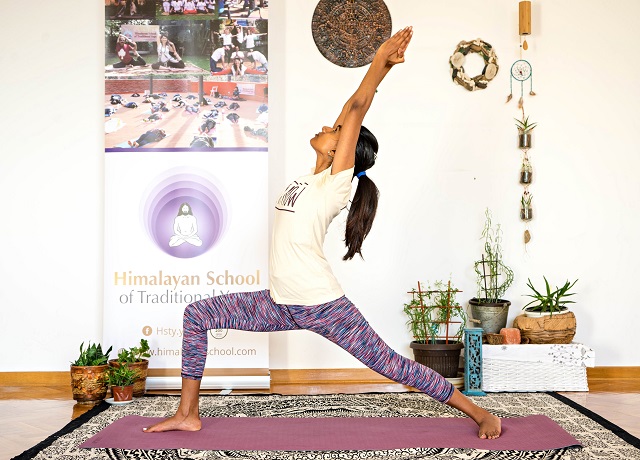
Yoga goes far beyond a mere physical exercise as it addresses the complete human being—in terms of body, mind and spirit. It addresses the lymphatic system, which plays a crucial role in our immunity. Unlike the circulatory system where the powerful heart muscle pumps blood, the lymphatic system has no pump. Interestingly enough, the body movements and positions held during yoga act as a pump for the lymph. There are approximately 600 lymph nodes in the human body, mainly situated around the joints, with clusters found in the underarms, groins, abdomen, chest and neck. Aside from addressing the lymphatic capillaries closer to the surface of the body, through the yoga asanas that belong to categories of extension, flexion, torsion and inversion, one can easily reach out to the deepest lymphatic capillaries around the inner organs, which no massage can do. The lymphatic system is a relatively new discovery as far as modern medical science is concerned. Still, the ancient seers knew all about it millennia ago.
Yoga practice reduces all inflammatory processes in the body because more antigens flow to the lymph nodes, thereby increasing antibody/antigen contact. Ancient masters saw through their inner vision that yoga helps with all types of inflammatory processes, including autoimmune diseases, arthritis, bronchitis, sinusitis, laryngitis, etc.

Yoga balances the endocrine system and the chakras (cone-shaped whirling vortices of energy rooted in the subtlest layer of our aura), with the kshetram (location at which they are felt) on the physical body. Our chakras collect, transform and distribute prana (the subtle life-force energy) to every part of the body-mind system.
Improving our flexibility through yoga means much more than one would anticipate. It is essential to understand that lack of flexibility is associated with energy blockages in the naadis (energy meridians in the subtle body). Combined with samskaras (negative/painful impressions of the mind) stored in the muscles, fascia and subconscious mind, it adds to the ‘luggage’ we carry unnecessarily. Yoga practice helps us to remove these blockages by working on our physical body, by consciously breathing through the blocks, pain and stiffness in the body during challenging positions. Hence we start experiencing a new lightness and learn to truly love our body as the vehicle of our soul, and come to experience the cause-less joy of our true self.
Through regular yoga practice, our automatic stress reaction pattern changes, and actual re-wiring takes place in the brain. Our consistent effort during practice to remain calm and focus on the breath instead of the discomfort is what creates the most significant neurobiological effect of yoga! The secret why yoga works is in its challenging postures, not in the relaxing ones. Training ourselves to remain calm during challenging positions and then diving deep into a relaxed state after such positions are what make the difference. The intentional sequence of exertion and conscious deep relaxation, and different forms of discomfort (like twists, flexing and stretching of the muscles, inability to breathe freely in challenging positions, etc.) followed by blissful relaxation, what actually happens within amounts to retraining of the automatic stress response in the nervous system. Thus the brain stops with prolonged fight or flight response to stressful situations. In other words, we are no longer in the clutches of our limbic brain. The innate response to stress, which we kept reinforcing through life, can be changed. Our brain does not discriminate between a challenging asana, running away from a barking dog or the pressure of finishing an impossible report within one hour. The physiological response will be the same and the brain regions involved are the same. The muscles will get tense; rate of breathing increases, heart rate will increase, negative or anxious thoughts will come, levels of cortisol and other stress hormones will increase. However, the techniques of focusing on the breath and not the discomfort, activation of the witnessing aspect of mind (sakshi bhaav), conscious relaxation of facial muscles, use of Ujjayi breath to slow down the breathing, complete focus on the here and now, affirmation of the lightness of the body, etc. must be used, with a certain period of training. It is fascinating that the process indeed works both ways and that through the breath and awareness, we can work on our mind and body. We need to understand that brain’s habit to invoke the stress response automatically is nothing but a pattern reinforced through time. Like all our habits, this one too can be changed.

This is why our ability to handle stress is increased manifold through the practice of Yoga. This ancient practice attunes our entire system to simply pay attention to the present moment, go with the flow without much resistance, calm the mind and nurture gratitude and surrender. Over time, we definitely get to retrain our automatic stress reaction, and replace it with one more conducive to happiness, compassion, well-being, wholeness and higher purpose of life rooted in the innate thirst for spiritual liberation.
Yoga – A Way of Life
Ultimately, yoga becomes a lifestyle that brings one into balance, lightness, love and gratitude. In the present day of Kali yuga, most people are leading a ‘bhogi’ life. A bhogi chases happiness in possessions, roles, status and all outer achievements that gratify his/her sense of ‘I’ and mine. He engages himself endlessly in competing for space, position and material resources. His actions gradually entangle him in a web of greed, ego and attachment. A bhogi ultimately becomes a ‘rogi’ – physically, mentally, morally and spiritually unhealthy. Whether we want to be a Yogi, Bhogi or a Rogi is a matter of choice.
Health is not just the absence of disease but a state of wellness in which one enjoys physical, mental, social and spiritual health. Most diseases today are psychosomatic, caused by negative emotions, an overload of stimuli and information through electronic media, as well as the overall speed of life. Negative impressions stored in the system adversely influence any individual’s attitude, outlook, dietary habits, relationships and behaviour. As a consequence, norms of physical and mental health are violated. Disease sets in when the body’s tolerance limit is crossed by repeatedly.

Yoga is a way of life. Aside from asanas and pranayama, it includes a sattvic diet, positive thinking, spiritual study, healthy relationships, silent meditation and selfless service. Chanting of ancient mantras in Sanskrit which has a vertical vibration and profound effect on the body-mind system and is of great help. A yogic lifestyle doesn’t mean renunciation or shedding family responsibilities. A yogi is empowered to maintain his mental equilibrium even in adverse situations. He is naturally free from addictions and unhealthy habits. A yogi celebrates the spirit of love through an intense and authentic spiritual connection with others and Mother Nature.
All in all, yoga sets a strong, solid Saatvic base for our full spiritual blossoming, which, if in line with our karmic agenda, leads us to the ultimate unity with the absolute while in the body. Aside from the numerous benefits at the physical, emotional and mental level, the consistent practice of Yoga leads to self-knowledge, i.e. knowledge of the truth of our being, considering one’s true self as an immortal soul having an eternal relationship with the Supreme Soul. With purity of intention and diligence in practice, through yoga the ancient promise of unity is sure to get fulfilled.
May all get to recognize and honour the deeper aspects of yoga and fulfil its promise in modern time.
Himalayan School of Traditional Yoga offers certified 200-hours Yoga Teacher Training Course in Bangalore, India, from 1st March – 26th March 2020. For more information visit www.himalayanschool.com/ttc

Article Source: Yogacharya Sanjay | Devi Mohan
Chief Faculty, Himalayan School of Traditional Yoga
About Himalayan School of Traditional Yoga: Himalayan School of Traditional Yoga (HSTY) is an institution dedicated to propagating traditional yoga, i.e. the essence of yoga as per the original teachings codified in scriptures by Maharishi Patanjali and other great sages of yore. Founded by Brahmarishi Mohanji, HSTY’s mission is to promote a culture of yoga and make it accessible to all of mankind, beyond the boundaries of country, religion, gender, class and wealth. By looking at yoga as a means of increasing awareness of one’s body and aligning the system to allow the expansion of consciousness, HSTY remains loyal to the original teachings marked by simplicity and depth of practice. For more information on HSTY and our upcoming programs, please visit our website www.himalayanschool.com