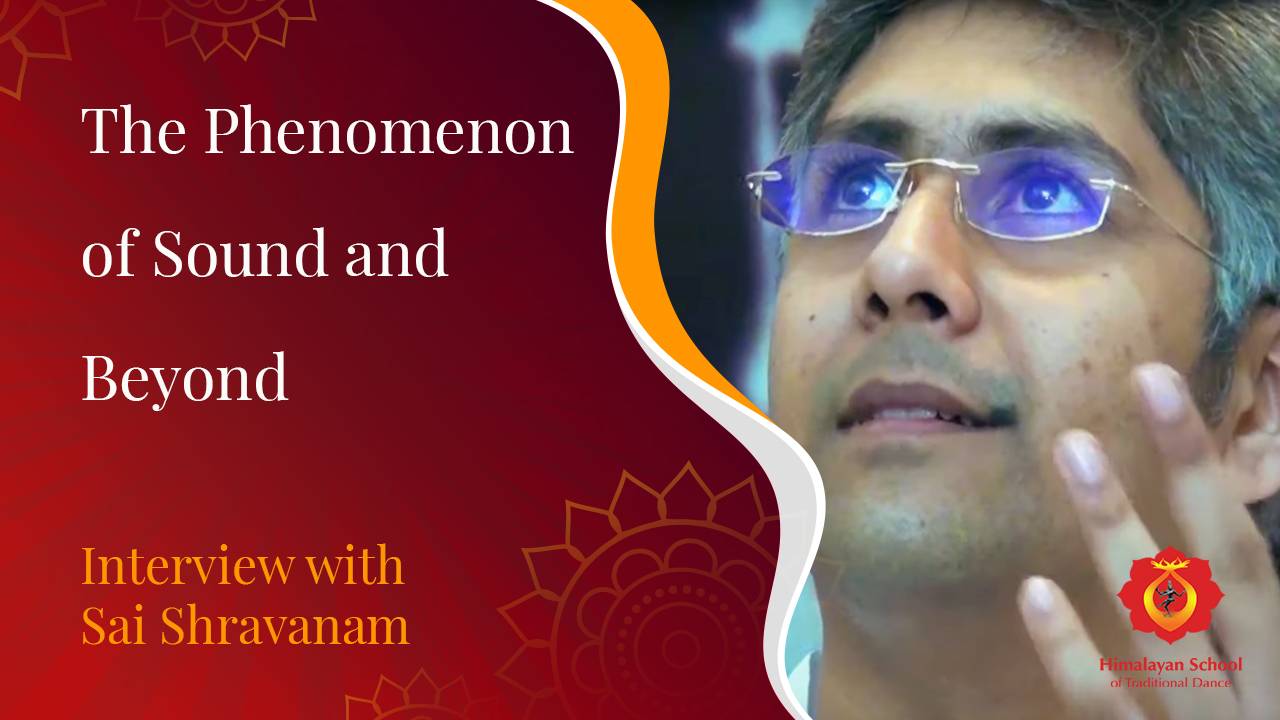
Sound engineering is a blend of art and science. So through this confluence, you can create amazing music that can help people relax, rejuvenate and recharge their lives. So can you tell me how your journey started as a sound engineer?
Sai Shravanam: There was no start to my journey, or any kind of initiation that I did myself. To be very honest, I was very inclined to music right from my younger days. I used to play the tabla; I used to watch the advertisement of Taj Mahal and be very inspired with Zakirbhai playing the tabla. And I was very drawn towards the instrument and I started playing the tabla. As I grew older, I was in school and you know we are all a part of culturals and my school was very active with these and orchestral music used to be made; choir used to sing; so I was initiated towards music arrangement and composition, apart from playing the tabla. I had a fantastic school principal, teachers who encouraged me to concentrate on music, rather than what happens nowadays with the academics; so I was literally cajoled by all of them. I cherished my school days just doing music, hardly studying; music drew me more closer to it, rather than me saying I went towards it.
I was just getting into college as a computer science student and was interested in making music through computer. I started recording to make my own music, my own songs. I used to record a lot of bhajans for Sai Baba. I used to do it all by myself. Eventually what happened is, I started doing most of it myself ; I would compose; I would play; I would play the keyboard; I would play the tabla and would arrange the music and record it myself, and make it a final product. I could understand that I was able to do all of this, without my effort to know that, this is something that should be done. Most of the time, we have a certain way of going and trying to achieve a goal, or want to be something. To be very honest, I never wanted to be anything. I was just following whatever was taking me. I was just like an abandoned boat in a stream, wherever it was going, I was just drifting along with it. But I had the confidence that whatever I was doing, the place I would go would be something that would give me joy and happiness. I was never worried about where I was going or what was drawing me; I was just enjoying because it was art, and it was music. So as I said, I’m just a witness to the journey to be very honest.
Many people asked me this question, but I don’t have a core answer as to this is what I wanted to do. I always wished to play the tabla, but I ended up as a sound designer. Of course, I do play the tabla; I make music; now I do a lot of things, but all of this gives me joy, all of this gives me happiness. And more than anything else, I’m an enabler for so many artists. Everybody has a creative fire in them and I’m very lucky to have some of the best in the world who come to me and I ended up becoming an enabler for them. More than being a sound designer; trying to understand what they want, trying to give in whatever best I could, trying to catch whatever best they have been trying to give; I try to be a catalyst between art and artists, that’s the best way I can put it. So I’m very lucky to be in there. That’s how I ended up being in my studio but the fact of the matter is, I was guided by Sai Baba, to do something from home in music, because Baba said, “You must take care of your mother.” So, it was just one small guidance that led me to complete work in my studio (where I’m sitting it’s not a zoom background – it’s my real studio) So, this is the place that I work in daily. I see it like my altar, and my journey continues.

In the light of all your observations, the viewers will be really interested in the projects that you cherish the most.
Sai Shravanam: I’m always awed by every project. I am not able to say that there was one project that really gave me happiness or whatever, because to be very truthful, the result of whatever you do ends up giving you something. But how would I put it, it’s like a mother giving birth to her children; you know every project is like a baby born, there are no biases. You just can’t say one is better than the other. It may so happen that one may be very intelligent, the other may be very artistic, one could be in sports and there is no comparison. When projects happen in my studio, it’s incredible. It’s out of nowhere and very beautiful. It’s something when all these amazing artists come together, the best of them are all captured and I end up weaving them together. It’s absolutely incredible that every project has inspired me and am in awe all the way at how everything starts.
I literally worship Rajkumar Bharati because he has taught me so much philosophy through music, and he used to tell me, “Thaane Nadakum” (Tamil words spoken) meaning things will just happen by itself. And it ends up becoming a very beautiful project at the end. I would say, the only difference between the projects, lies in the one that is socially very successful or marketed very well, and the ones that not many people know about. So as projects, everything is my favourite, everything is wonderful; whatever I do, whether it’s a voiceover, whether it’s a wildlife film, whether it’s dance, whether it’s music, sometimes poetry. I have some great poets who come to my studio to read their poetry. And it’s incredible! Everything is incredible! You can’t compare. The only difference that comes is the way it’s marketed, who the artist is, how well the project is known, how good the film is, etc.
Like “The Life of Pi” really gave me a visiting card; people would always introduce me to that because it was such a successful film and I played a fair role in getting the Indian music and the film recorded. So that became a visiting card, when I least expected something. I didn’t know what “The Life of Pi” was, I didn’t know who or what project was happening. It was something like yet another interaction with another foreign client /project and all of a sudden one day you are in the newspapers, you know. So that kind of thing gives you excitement, that kind of thing gives you an experience of happiness, an experience of pressure, an experience of learning and unlearning, how to rejoice, how not to rejoice, it teaches you everything. So there is no one particular project. I love working for music that’s all. Anything is fine.
Your name is Sai Shravanam. Shravanam means to listen. And it is one of the extolled forms of Nava-vidha bhakti. As a sound designer, you will know the importance of listening to sounds. So can you tell us some of the practical applications of listening, as well as, how it is useful in life as well? We are always in a hurry to talk, but do we listen to the sounds. So we want to know from you how important is listening?
Sai Shravanam: Listening is life, you know. Listening is life, because it’s not merely sound: you have to listen to yourself. You have to listen to your conscience; you have to listen to things around you; you have to listen to your feeling; you have to listen to your intellect. You have to listen to things happening around you, which is also something like music or somebody speaking to you. Listening is life, if you don’t listen, then I don’t think there is a step you can go forward in whatever sadhana you are in, in whatever journey you are in, in your life. When it comes to sound, yes! Listening is very important but observation is more important than just listening.
Listening is to be seen in two ways. One is to listen through your ear, the other is to listen through your heart. Even music is something that you have to listen through your heart, it’s not merely aural. The ear is an instrument, but listening comes from within. Listening is not merely about sound. It would be very wrong for us to say that listening is through the ear and you focus and it’s an aural thing. It’s much beyond.
In the context of Nav-vidha Bhakti (Nine types of devotion) scriptures won’t use a word like shravanam so easily. It’s very deep; it’s very spiritual only if you are inclined to it, you could understand, or we could try to make people understand but that could take you one hour and I’m not mature enough to talk about Shravanam. But incidentally, Swami or Sai Baba of Puttaparthi named me Shravanam, when I never had my name until four years. (I used to be fondly called “Pintu” in my family.) I never had a name, because my mother was very bent upon the fact that only Baba should name me. So I ended up getting the name, Shravanam. Only later did I realize that the name was what I was meant for. It didn’t even strike me until Baba visited my studio and said, “ Perruh correct aah Irruka” ( Is the name correct for you? ). He told me, “I named you Shravanam and all your life is shravanam (listening)”. So that’s when you realize that some things are meant to happen!
On the importance of listening, it’s not about priority; it’s not when you say, how important, then the word priority comes in, you know, important or unimportant – listening is life. You always have to keep yourself open. Not with your ear, but overall you have to keep listening to whatever is happening around you. That is when you open up.
In Sound, my job in the studio is only to listen. Because, even if it’s good, I have to be very just, non-judgmental and just listen. If it is bad, I still have to be non-judgmental but I will force judgment and correct it. When something is very good, I cannot stop with, “Yes! This is good”, I will still have to see if it is going to get better. And for that, you really have to be disconnected with whatever work you’re doing. For example, an amazing artist is coming and performing in my studio. They may be amazing, they may be a Padma award winner or a Grammy Award winner. But my job is not about recognizing who they are. My job is – is the note coming from their instrument or voice right, does it deserve the place that it should – like suppose we say swara sthanam ( place of notes) or layam ( melody), does it stay where it is? My job is to completely wither away from all the whims and fancies that people have and just listen to what is given to me. It doesn’t matter from whom it comes. All that matters to me is, does it make sense to whatever is the product or whatever is the child that we are making. So, listening has been my fundamental. From the moment I keep my microphone, I have to listen to somebody play and see where the microphone should be kept; until you all listen to whatever I do, as to how you should all listen and how my mix should be so. Listening is my life.

You have collaborated with great artists to make sounds, come alive. Can you tell us, more about “Life of Pi”, the movie of Oscar fame?
Sai Shravanam: What happened was, One day, Bombay Jayashree Akka called me up and she said, “Sai, we have to record some song. It is something in the US and they want some remote location recording. I have to sing from here and they want to know something. It is a very technical thing. I will connect you, to somebody. Why do not you speak to them? We will see, if this can happen. I could only think of you.” Very graciously, she called me up and I was like, “okay!” I received an email that had someone’s name@fox.com and I was like, it is from Fox Studios. We all see movies; we see 20th Century Fox. Somebody wrote to me, asking me if I have a studio with this facility, that facility etc. To be very honest, I have no facility. I just had good rooms like this. I had good microphones, but I did not have this remote location recording software etc.
When I searched online, it showed me that, it was a very expensive software that I cannot afford at that point in time, just for this one little work. So, I wrote a very honest email to them saying that I would love to do this work but unfortunately, I do not have the software and it would be very expensive for me to buy this. But, if you want I can record the singer and send it to you, if you give me the files. So they wrote to me, saying that if we give you the software, would you be able to do it? I gave him my fullest. I had to learn it. I had to literally learn a technology, which was not easy. I had 24 hours to do that. I still remember I did not sleep the whole night. I was reading on the internet as to what this was. How, when somebody sings here, somebody could record it. How will it sync? With Zoom itself, we have so much delay. How, would all this happen through the internet? That to high-quality audio, they want a video, they want audio, they want to control my machine etc. It is was just off my head. How would you feel, when I am saying, you have to suddenly do this tomorrow. That was the kind of pressure I had. I wrote to them saying that if I had it all, I can pull this off. That’s what I wrote to them. That positivity, kind of hooked onto them and they said okay. We will buy the license for you. Will you record? And we trust you work. We know, what you do. They gave me the license, themselves.
I installed it. In four or five hours, I got a very high-speed line from BSNL. They gave me a line and I got my studio up and running. The tests were done. They said, you have to test it. We ping a studio to another studio. I still remember I did not have food for 30 – 32 hours. I did not even drink water. I was being called again and again for food and I was like, no. I do not have time. I have to record. After 30 – 32 hours of non-stop looking into the computer and pinging to London and testing the session etc, the next day, this song (which was nominated for the Oscar) the lullaby song was recorded in my studio. Bombay Jayashreeji sang it. That was when, things were opening up. Somebody sitting there in the US with someone singing here; went off so well. They were so excited that, they gave me a few more sessions of adding the Indian instruments in the film. They said that I was very committed. I was incredible in my work and the file sounded great. They gave me, another project to record in the same film; of adding percussion instruments throughout the movie etc. Another artist, Selva Ganesh had come in. The reels were sent to the music that Michael Dana Sir had done. We were creatively adding layers to it. I thought it was a great experience but I never knew it was such a big film or it would become a big film; we finished it.
When it was all over, they asked me for a bill. I sent a bill and my conscience said that just because it is an American company or a big project, I should not be bloating up the bill. I treated it like one another Indian client and I sent them a very simple bill. I think, they did not expect it. It was a very small amount. They wrote to me saying “Sai, We have to redo the invoice. We will send you an invoice and you please sign it.” I thought, I wrote something wrong and I overpriced it. I was a bit guilty. I felt very bad. I kept telling my father. I should have asked someone and then sent a bill for a very big project. I do not know. They sent me a bill that, was probably 15 times more than what I quoted, and they said just signed. I wrote to them, asking for whom it was for and this was for what? They said this is for your hard work. We would like to pay you the way we would have done if it was recorded in the US. You did a fantastic job and your quality was incredible. We like the way you work. This is what we want to give you. Even that came in abundance without my expectation. More than anything else, all of a sudden, I received a call from the Vice President of Music division of Fox, “Sai, the song is nominated for the Oscars and the film soundtrack is nominated for the Oscar”, I was like, which one? I still remember, I was in the car and when I received this call, I felt, this is incredible. That’s when you realise that, it is not the project. Whatever you do, you do it sincerely, and probably God will decide what the fruits are. That was my experience with “Life of Pi”.
Can you share with us, your insights on sound, silence and spirituality?
Sai Shravanam: There is no sound, without silence. Silence is fundamental. If you never knew what silence was, how do you know what sound is? If you do not hear a sound, you’ll never know what the silence is right. They are married to each other. Spirituality is a combination of sound and silence. I am not trying to give any Gyaan. I am a learning aspirant. When I see through sound; when I see my daily life, you realise that, it is incredible that only through sound, you can go into silence. When there is noise inside you, you would want to seek for some quietness. Right? When your mind is super busy, that is when you really want to shut off. When you’re completely shut off, noise is the one that takes you back to this and that. I do not know what it is to be a spiritual master because I do not know. I do not know what happens inside the head, but I know for people like me, the sound is the noise and silence is what is inside us spiritually.
Without that kind of sound and noise, you will never understand spirituality. It is very important, that you undergo the hardships. It is important that you have the noise. It is important that you have the tug of war. It is important to have varieties of emotions inside you. Then, later realise that it will all funnel down to something which is very quiet. That silence actually makes you realise the vastness of sound. Say for example, when I play the tabla, when I record artists, it is beautiful when they are creative. But, when it keeps on happening for some time, and there is the silence, then you’re like, Wow! You do not want to hear that noise.
When you’re not understanding the silence, you will keep wanting the sound more. What happens is, you will keep on listening to music. I dread the sound of Tanpura because daily morning, I started with it and ended with it. I really want the silence. At the same time, the Tanpura sound is peaceful for somebody else. They are calmed down by Tanpura. There is a therapy that happens with the Tanpura etc. It is so individual. But, when I have had a lot of silence and then, when Tanpura comes in, I am like wow! When I do listen to so much to Tanpura, I am like I do not want this Tanpura. Sound and silence are very married. They are the same. They are not different.
The world is full of polarity. You have man, you have woman. You have light, you have dark. You have good, there is bad. Polarity is nature. Polarity is creation. Polarity is beautiful. Sound and silence is polar. Sometimes we mistake, silence is the ultimate truth. Probably yes, but I have not experienced that myself. Those who tell, I trust them that silence is the ultimate truth. To seek that, we go through the noise. Daily my studio teaches that.
When I finish work and when I go down, my son would watch TV loudly, there would be kitchen sounds and the only thing I keep telling my wife is to not make noise. The only thing I tell my son is, is to please put the volume down. For them, it is normal. For me, after coming from so much noise, I seek silence. I just drift into my bedroom and quietness. When I’m actually quiet, all through the lockdown and other things, when I’m quiet and I do not listen to anything, suddenly, there is this music that happens, I’m so drawn to it. That’s when, you realise that it is so beautiful.
Sound and silence are beautiful. It teaches you spirituality. Daily sound teaches me spirituality. Even dissonance, even between sound and silence, silence is just one. The sound is polar. It is dual. It is multiple. There is harmony, there is disharmony. In sound, there is a melody; there is noise. Sound can be annoying. Sound can be pleasing. Sound can heal. Sound can hurt. But, with silence, I do not know. With silence, there is no answer. These kinds of thoughts come when I record. If I talk like this to somebody, they will say this guy is some kind of a guy. I do not speak. You asked me a question, so I speak. Otherwise, I am just quiet.
Interviewed by:
Radha Subramanian, artistic director of HSTD
Smt. Sathya Shivakumar, Mohanji Acharya, Global Member HSTD
Watch the full interview here: https://youtu.be/Lw4SHzrj9QQ