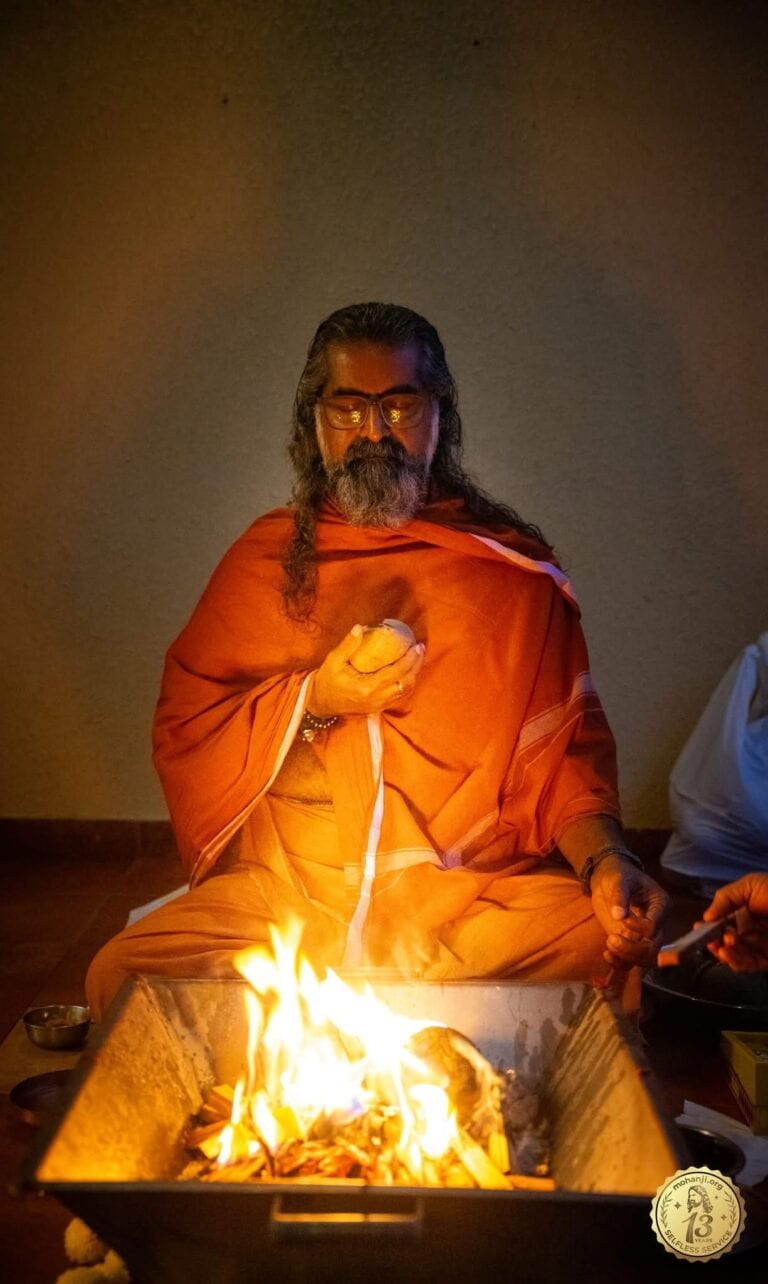
Breathing is a potent tool for the stimulation of personal growth and transformation. This article discusses the what and the how of a specific breathing therapy called bioenergetic breathing or round breathing.
Someone tells you to “take a deep breath.” There’s more to it than you think. It’s the tip of an iceberg most people have never seen or heard of.
For many years, I practiced, taught and explored an unusual form of therapeutic breathing known as “bioenergetic breathing.” It’s basically just strong deep breathing — a controlled hyperventilation, intended to stimulate an altered state, lubricate the emotional gears, facilitate self-expression, and reveal personal habits and limitations. Bioenergetic breathing originated in the bodywork philosophies that emerged originally from Alexander Lowen’s interpretations of Reich and Jung. Interestingly, the same breathing style is called “round” breathing by the Chinese in the context of qigong, and has some deep roots in that culture, although in a much different way.
I learned about bioenergetic breathing from Joanne Peterson and Drs. Jock McKeen and Bennet Wong at Gabriola Island’s renowned Haven Institute for Professional Training. What I teach today is an adaptation of what I am still learning whenever I visit Gabriola.
How to
Bioenergetic breathing is basically just fast, deep breathing. It emphasizes inhalation, which is assertive and full. It does not pause at the top or the bottom of the breath, forming a smooth sine wave. The mouth and throat are kept wide open, removed from the path of the breath, trying not to shape or control the flow of air. Most people attempt to breathe predominantly “with” their mouth, nose and throat. It is the body that breathes: the upper respiratory tract is just an obstacle course between the world and the engine of your respiration.
In a typical bioenergetic breathing session, you might work up to a vigorous pace of breathing in the space of a minute or two, continue for five to ten minutes, and then wind down again.
How fast is fast? “Fast” is roughly double to triple your normal resting respiratory rate — about the same as if you’d just been exercising. Depth is more important than speed. Go as fast as you reasonably can while still actually taking and expelling a good chest-full of air. Don’t cut corners off the amplitude of the breath just to get greater speed. The overall effect is pretty vigorous, but it doesn’t have to be ridiculous. If you were to breathe like this in front of someone, but act otherwise normal, they would say, “Wow, hey, what’s up? You been running or something? Doing some kind of deep breathing exercise?” It’s an eyebrow-raising pace, not a “call 911” pace.
And what’s the point of all this breathing?
Breathing like this is stimulating, invigorating, and cathartic. It induces heightened and altered states of awareness and sensation. Much like meditation, it’s harder than you think, and the challenge is educational. Very unlike meditation, this is much messier, noisier and more emotional. Many people experience and struggle with strong emotions. More on this up next.
For more information about the deeper philosophy of breathing, read The Anatomy of Vitality. But I suggest that you just try it first … I think that you’ll like it.
There may be some valuable biological benefits, such as an anti-inflammatory effect. But I make no specific claims. But the hope of such effects has never been my rationale for practicing this kind of breathing. Still, the potential is there.
Importantly, this is not “energy medicine.” You’re welcome to interpret it that way if it floats your boat, but I prefer to frame to think it in terms of biology and psychology.
The surprising challenges of deep breathing
For something so simple, bioenergetic breathing proves to be a surprising challenge for nearly everyone. We may experience fear, frustration, apathy, exhaustion, grief. Obviously, the challenge isn’t technical — it’s just heavy breathing. So what is it that gives people such trouble?
Shallow breathing is the norm in our society (I’m Canadian), but also many other societies and culture, and it’s a major mechanism of self-restraint, toughness, and stoicism. These qualities are essential to be an effective adult, to deal with our troubles, but they are also suffocating, figuratively and almost literally. Shallow breath is a manifestation in our body of a psychological comfort zone that we are reluctant to leave or disturb.Shallow breath is a manifestation in our body of a psychological comfort zone that we are reluctant to leave or disturb.
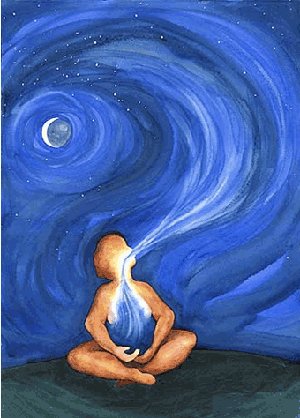 Deep breathing stirs up interesting and disconcerting sensations, and we have a startling repertoire of tactics for controlling and limiting the experience so that it is a little less boat-rocking. Some common avoidance behaviours that I’ve observed over the years include chain yawning, squirming, blowing and hissing, wheezing, dry throat, aches and pains that magically pop out of nowhere, an attack of silliness, giggles or ticklishness, and so on. As they attempt to proceed, many people will experience anxiety, frustration, grief, or — and this is a tough one — an intense apathy or fatigue (wilting, fading away from the exercise).
“The fade” is the most difficult of all avoidance tactics to navigate, and it happens to be my own signature reaction to deep breathing: when the going gets tough, I get sleepy and tune out. It’s a major defensive mechanism for me, and a great example of why this can be hard.
Getting past these defenses is so surprisingly difficult that most people need coaching.
Parasthesia, tetany and tremors, oh my! Transient physiological consequences of deep breathing
The challenge is complicated by the fact that bioenergetic breathing tends to cause three harmless but potentially alarming side-effects: parasthesia, tetany, and tremors.
Sounds dramatic, doesn’t it? Well, it is kind of exciting. This is powerful stuff. But these experiences really are harmless, and they tend to go away with practice. I myself went through them and came out the other side many years ago.
Parasthesia simply means “altered sensation,” usually in the form of tingling that starts around the mouth, at the fingertips and in the toes. As it advances and spreads, it is usually accompanied by tetany — sustained but mild contraction of muscles (and not the same as cramping from tetanus infection). The hands and feet tend to “claw up,” and your lips will feel like you’ve just been to the dentist! This is different than spasm, and it is more stiff than painful. It wears off quickly. Finally, tremors may sweep through the body erratically, perhaps favouring a specific limb or side, but this too passes rapidly — and should actually be indulged when it occurs. Let yourself shake.
These symptoms are produced by an altered mind-body state, both physiological and psychological. The tetany and tingling are the specifically the result of some changes in blood chemistry: minor transient respiratory alkalosis, making your blood slightly less acidic. The tendency to tremor is partly the alkalosis, but more likely more of an emotional effect, “letting go.” We are all hanging on tightly to so very much, including our own bodies. The breathing shakes us loose. I advise you not to try to stop it.
Again, all of these side-effects are temporary. Bioenergetic breathing is not the same as hyperventilation. It is not dangerous in any way. (There is one huge exception to that statement: holding your breath underwater after hyperventilating is crazydangerous: see “shallow water blackout.”) Any sensation you experience during breathing will go away as you slow down and stop.
Soul diving!
You might become extremely emotional during bioenergetic breathing. I’ve seen people start crying about something tragic that they haven’t expressed their sadness about in many years, even decades.
Most people feel like crying. Feeling sad/frustrated is the most common emotional reaction to breathing, but many also feel like they want to hit something — hint: try a pillow! — and any other kind of emotional experience is possible.
Sadness and anger are the two great under-expressed emotions. Most of us have deep wells of them. Bioenergetic breathing can be a handy way to deliberately induce cathartic crying jags. Indeed, some people notice that they cry every time they breathe like this, prompting the question, “What else is there? When will I be done crying?” The answer is, “When you’re done.” If you’ve been holding back sadness for thirty years, expect it to take a while. But trust me: there is something beyond all the crying. And that is what this work is all about. It’s soul diving.
Possibilities
Go to it. Slow down and stop if you get alarmed. There are no rules, but many possibilities. I’ll leave you with a few of those …
- Try breathing like mad for five minutes and then holding your breath for a little while. You’ll be impressed by how long you can do it. (But never, ever do this underwater!)
- Try breathing in different positions. Some classic positions are: draped over an exercise ball (face up or face down), touching your toes, leaning backwards, flat on your back with the knees up, squatting, child’s pose, while doing virtually any stretch …
- Try breathing in different patterns: three sharp breaths in, one out.
- Try breathing by “filling” different parts of your body: the deep belly, the solar plexus, the upper chest. For a real challenge, “fill” the less flexible parts of yourself.
- Try adding movement to the breathing, either rhythmically and repetitively, or randomly.
- Try visualizations. The possibilities in this category alone are virtually limitless. Two examples: pull energy in through your head with the intake and flush it out your toes on the exhalation; or visualize yourself like a coal that swells with heat and light when you blow on it! I like that one …
- Try breathing with music that you love.
- Try adding sound to breathing. Start with noisy exhalations, like you are groaning with satisfaction and weariness at the end of the week. That’s a good place to start. But you can work up to all kinds of noisy nonsense. If you have the privacy, do not hesitate to be emotionally noisy.
- Combining bioenergetic breathing with a hot bath. They interact synergistically with each other, resulting in a richer overall experience.
- And on and on …
Author: by Paul Ingraham, Vancouver, Canada
Source: www.painscience.com