Greater Noida to Unnao | 21–23 January 2026
Over three days in January, from Greater Noida to Unnao in Uttar Pradesh, interfaith leaders, constitutional thinkers, educators, and community representatives assembled to reflect on the ethical direction of contemporary India. The gatherings unfolded through ceremony, cultural expression, and formal dialogue, yet the central thread running through each exchange was responsibility, articulated as structure.
Responsibility was examined in civic, constitutional, and civilizational terms. Speakers addressed the obligations inherent in freedom, the discipline required to sustain pluralism, and the maturity demanded by democratic participation. Discussions extended beyond theory into conduct: responsibility toward inherited traditions, toward institutions, toward ecological balance, and toward the unseen consequences of public action.
Across formal panels and private consultations, a consistent proposition emerged: rights endure when supported by a culture capable of carrying them. Responsibility was positioned as a stabilizing force, a principle shaping leadership, social policy, interfaith engagement, and everyday citizenship in a nation negotiating scale, diversity, and accelerating change.
Infrastructure, Not Optics
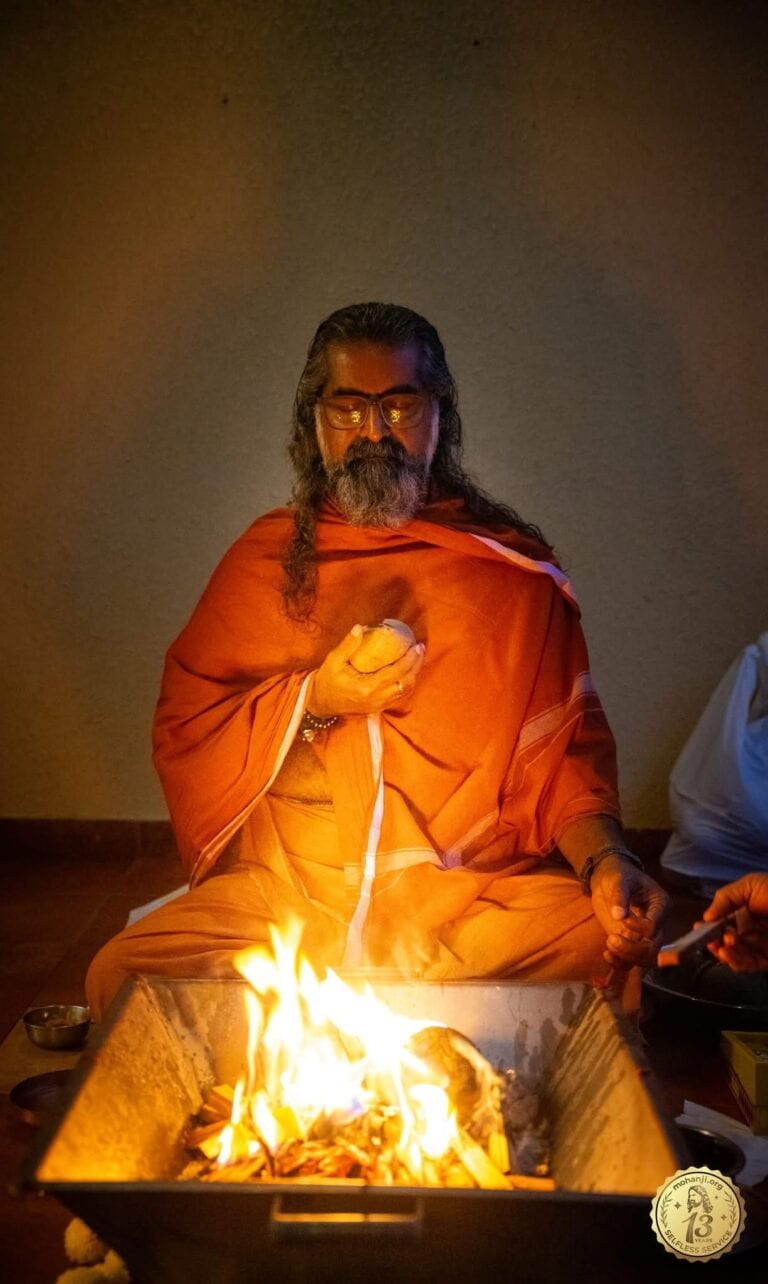
On 21 January at Thakur Dwara Mandir in Greater Noida, during a session of the Bhartiya Sarv Dharma Sansad led by Mahamandaleswar Goswami Sushil Ji Maharaj, Mohanji laid the foundation stone for a new structure within the temple complex, intended to represent coexistence across religious lines.
Foundation stones are routine. What matters is how the space is used. Whether it becomes a place of sustained interfaith engagement or remains a ceremonial marker will determine its meaning.
In a country where religious identity is often used for political gain, dedicating physical space to shared presence carries weight, if it is consistently lived and not just announced.
Forming Citizens, Not Spectators
Later that day at Father Agnel School, amid celebrations of Agnel Jayanti, Basant Panchami and the approaching Republic Day, the emphasis shifted from representation to formation.
Addressing students, Mohanji focused not on harmony as an abstract idea but on self-discipline: observe your tendencies, reduce comparison, strengthen awareness. Internal stability, he suggested, comes before social stability.
The implication was straightforward. A population driven by insecurity and reaction cannot sustain pluralism. Responsibility does not begin in policy. It begins in conduct.
That framing moves the burden of national health from institutions alone to individuals.
Memory as Obligation
On 22 January, tributes were paid en route to Unnao to freedom fighters, including Chandra Shekhar Azad. Such remembrances risk becoming ritual unless tied to present duty.
India’s independence was secured through sacrifice and restraint. Today’s public discourse often centres on claims and demands. The contrast was not stated directly, but it was visible.
Unnao: The Behavioural Argument
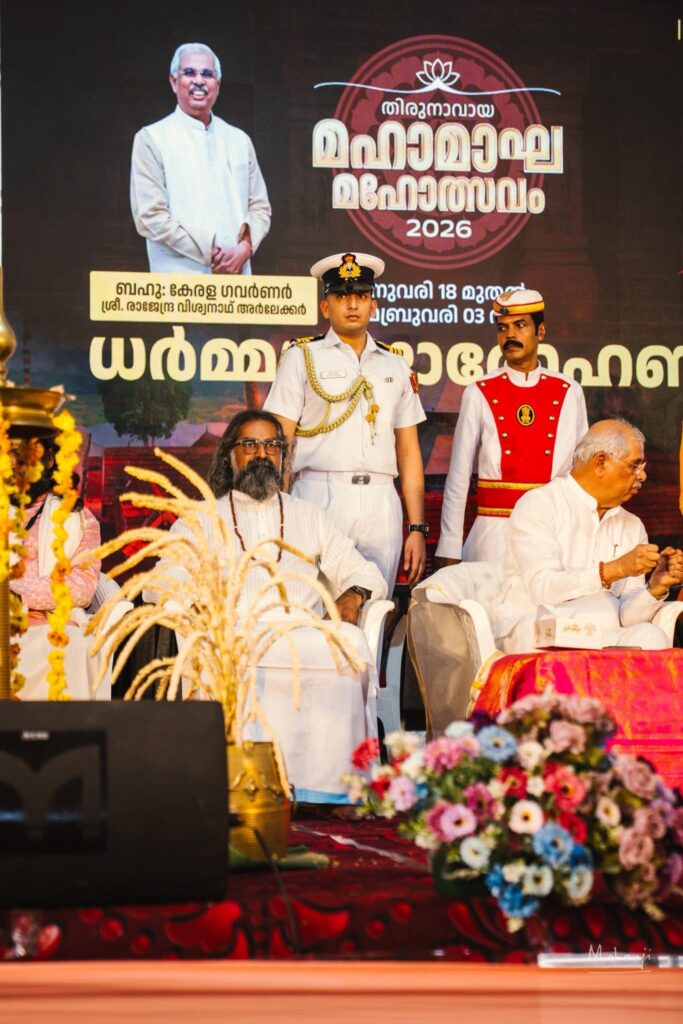
The largest gathering took place on 23 January at Ramleela Maidan in Unnao during the Sarv Dharm Mahotsav. Thousands attended. Religious leaders from multiple traditions stood on one platform. Devotional music and patriotic expression shared the same space.
Unity was visible. The real test lay in what was said.
Mohanji addressed what he described as an imbalance in national conversation:
“This has gone way too far,” he said. “What I’m saying is simple: we have work to do, we need to make India much better for the next generation. New people are coming, our children are coming, their children too. We have to give something better to them, that is my responsibility. Responsibility. Right now, people only think about their rights, not their responsibility. Everyone talks about rights, but almost no one is ready to take responsibility. So, we will take responsibility. And it is not just a few people, if all 1.4 billion people of India decide to take responsibility, everything will change.”
The emphasis was not political. It was behavioural. A rights-based conversation requires assertion. A responsibility-based culture requires effort, restraint, and self-correction. It asks citizens to examine their own role in corruption, apathy, inefficiency, and division before placing blame elsewhere.
That is a harder demand.

The Real Test
Interfaith gatherings are not rare in India. Declarations of unity are plentiful. The difference lies in whether such platforms lead to change beyond the stage.
If responsibility is to come before rights, then the implications are practical:
- Will communities challenge misinformation within their own circles?
- Will institutions enforce standards internally instead of deflecting blame?
- Will citizens prioritise long-term national stability over short-term personal gain?
Without such shifts, unity remains performative.
If they do happen, the change will not be dramatic. It will be gradual, spread out, and mostly unseen, expressed in everyday decisions made without attention or applause.
Responsibility, unlike rhetoric, offers no audience. It offers no applause. It only leaves a record, of what each citizen chose to do when no one was watching.