In our silence, we speak the loudest.
In our understanding, we hear the clearest.
In our sacrifice, actions find greatness.
The simplicity of life’s duty:
We see, we know, we realize, we act.
This is wisdom.
All else is mere book learning, mere straw.
We have realized for a long time that animals feel pain the way we do, and that they do suffer, just as we do. In the last century, the human race evolved at an accelerated pace in acknowledging, accepting and realizing the futility of war, and the suffering, destruction and total desolation that it brings (especially from the experience of the two world wars). Was this the birth of global conscience? Was it a realization that for one nation to harm another is akin to the hand striking the body that it belongs to. At the same time, awareness of other levels of suffering caused by humans, was acknowledged. The human-to-human suffering was fought and the wave of realization was beginning to dawn with the abolishment of slavery, and with the fight against discrimination. Was this the first frontier to be
crossed? Then, the latter part of that century saw a focus on the human-to-environment impact, disclosing and realizing the harmful effect of human activities and greed on the environment. Was this the second frontier? Now the third frontier awaits, or does it? When will the human race respond to the pain, to the untold suffering, to the plaintive call of the voiceless animal kingdom – the only one that
few of us have realized that feels pain and suffers, just as we do. Will that response come too late?
Here, I narrate an incident that occurred which “broke something within me”: I was at the scene after a neighbour’s dog was knocked down by a car that did not stop. As she lay on the road, kind neighbours rushed forward and carried her to the pavement, to prevent ongoing motorists from further harming the wounded animal. Her cries were soul-wrenching. They sounded as though they came from the bellows of the earth. It was enough to move me to get to her as she lay on a blanket on the ground. Her broken bones were obvious and her immense pain so “human”. I placed my hand on her and stroked her, as I had done so many times with our own pet, to calm her and to give love, and to convey the message that I understood what she was going through and that everything would be okay. But, do we really understand their pain? Are we really certain that everything will be okay for them? All this occurred as we frantically tried to locate her owners, who were not at home at the time. In that short time at her side, there was hope in me that “we”, the human race, was advanced enough and that we cared enough, to save her. The following day, my enquiry as to her condition was met with a shocking revelation that she was “put down”. My wife argued with the side of the “majority”, that it was the best thing to do to save her from further suffering. I disagreed. I had a profound realisation as I squatted by the side of the wounded animal the previous night: that the flesh and blood and collection of nerves in that physical body, was the same as in the human body. I asked my wife if she would feel the same way if it was me or one of our children lying there in pain. She honestly admitted, “I don’t know”. And I questioned, as I do now, that all the technology we have, and all the advances in science that man has made, was unable to relieve the suffering of this animal without killing it. We have reacted to animal suffering in the same barbaric way that we did a few hundred years ago: if a horse breaks its leg, then shoot it to relieve its pain. This was acceptable in the times of the wild west as portrayed in the movies. Yet, we believe that we have certainly advanced since then, particularly when it comes to understanding and responding to human suffering. Why then, is there little or no response to animal pain and suffering? Or does it not matter still? Does man’s charity and the limits of our sciences extend only to humans? Do we not have the financial resources, technology and the “heart” to
respond to and end animal suffering?
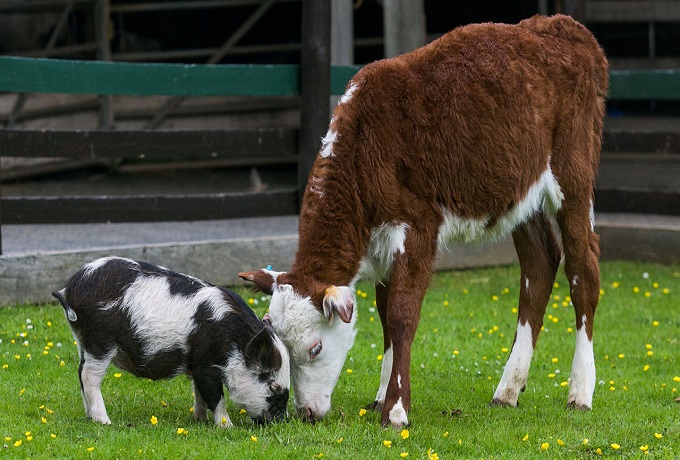
There is a need for a global conscience, now more than ever, to understand and respond to animal pain and suffering throughout the planet. The time has come to listen to that “plaintive call” and do something about it. The arguments are simple: “They feel, they suffer. We know only too well. We must respond. We must act. If we do not , who will?”
A vision:
A global awareness, possibly even through a movement, to acknowledge and respond to “animal pain and suffering” and efforts to “treat” their injuries and ailments the way we do with humans. Undoubtedly, this acknowledgement animal pain and suffering and a global movement to respond thereto, must follow our own efforts, individually and collectively, to stop causing such pain and suffering to these voiceless beings. The global conscience has to grow to a movement to end the slaughter of helpless animals and promote vegetarianism and veganism, as animals are tortured cruelly to provide meat and milk and the by-products of milk. The Tirukkural succinctly declares: If one realizes that meat is nothing more than the wound of another creature, one refrains from eating it. Individuals of a clear vision abstain from the flesh of a slaughtered animal (Chap. 26).
Businesses benefit immensely from advances in the measures to relieve human suffering because it brings profit. Do we care enough to relieve animal suffering, either through technology or through making humane and non-violent choices when it comes to food? Humans and businesses have profited from animals and animal suffering for far too long. There has to be “redress” for the pain and suffering that the human race has collectively caused to the animal race. We must now make amends and seek their forgiveness for the tremendous suffering we have visited upon them. This will only be achieved by our actions in the present and in the future. Are we willing to mend our ways, to show compassion and to respond to their immense and continuing suffering? They are crying out helplessly, are you willing to hear their voice, and ARE YOU WILLING TO BE THEIRS? Are you willing to make a difference?
The Mahatma himself proclaimed: Be the change you want to see in the world. Even if you start by giving up one category of meat or avoid meat eating for just one day in the week, this would be a glorious start to your individual conscience and ultimately, in awakening a global conscience. Even if the world does not change, you would have changed and your thinking would have changed. Would this not then be the Awakening of the Global Conscience?
A POSSIBLE CHARTER FOR ANIMAL RIGHTS
1. All animals should have the right to life.
2. All animals should have the right to not have pain and suffering inflicted on them by humans; either for food, humane purposes such as vivisection, or testing.
3. All animals should have the right to receive health care/treatment for illness or injury.
4. All animals should have the right to food and water and to be free from starvation.
5. All animals should have the right not to be tortured or be subjected to cruelty of any sort for any purpose.
6. All animals should have the right not to be separated from their young ones and vice versa.
7. No animals should be used for human entertainment purposes.
8. All animals should have the right to be free from fear and distress.
9. All animals should have the right to be free and they should not be confined to restricted spaces such as cages; neither should they be chained.
10. All animals should receive the love, compassion and care that they deserve.
Article by Prof K. Reddy
K.Reddy is an Associate Professor of Applied Law. Apart from lecturing, he supervises post-graduate students, and engages in research, particularly relating to the role of the law in social justice issues. His hobbies include running, hiking and canoeing. He has completed several Comrades Marathons, some of them while following a raw diet of fruit, fresh juices, nuts and salads. He follows a vegetarian/vegan diet.
Feature Image credit: https://www.insideedition.com