An Exclusive Interview with Baiju Mohandas

Kalaripayattu: Decoding the Timeless Power of Ancient Martial Arts – An Exclusive Interview with Baiju Mohandas
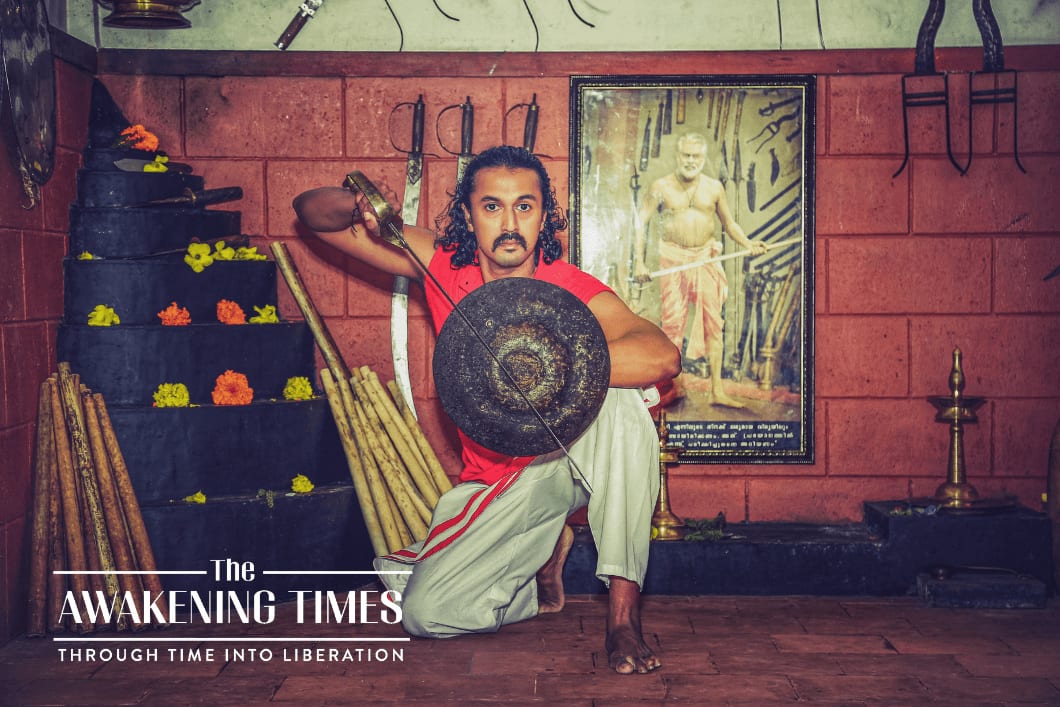
Baiju Mohandas, an ardent practitioner, has embraced Kalaripayattu, the ancient martial art, as his guiding force for over a decade. Commencing his journey in 2006 under the guidance of revered Masters, Baiju devoted himself to rigorous training, organizing workshops across India, and fostering international engagement in this art form. His personal story, shared in our interview, provides unique insights into the rich heritage and discipline of Kalaripayattu—a practice spanning thousands of years—its spiritual connections, and the demanding discipline required to master its revered techniques.
The Awakening Times (TAT): Thank you for taking the time for this interview and welcome. Today, we’re discussing the relevance and impact of traditional martial arts. What are your thoughts on the importance of traditional systems like the Kalari fight from South India in today’s world?
Baiju Mohandas (BM): Thank you for having me. It’s an important topic. Traditional martial arts, especially Kalari, often regarded as the origin of many martial arts, hold significant relevance today. Originating from South India, Kalari isn’t merely a fighting technique; it’s a comprehensive discipline integrating physical training, mental development, and spiritual growth. Given our current lifestyle challenges leading to numerous health issues, practices like Kalari, deeply rooted in herbal medicine knowledge, offer holistic benefits. Preserving these traditional art forms is crucial. They provide a unique blend of physical rigor and mental discipline, immensely beneficial in our fast-paced, modern lives.
TAT: How closely does the contemporary practice of Kalari mirror its historical form?
BM: Kalari has retained much of its original form. Traditionally taught through a guru-parampara system—a lineage of masters passing down their knowledge—it ensures the preservation of core principles and techniques. Though there have been adaptations in terminology and training methods to suit modern contexts, Kalari’s training includes understanding Marma Sastram, an ancient science of vital points, which remains integral to the practice. Its survival through challenging times, particularly during British rule in India when it faced a ban, is a testament to its resilience. Masters disguised Kalari techniques within dance forms and other cultural practices, preserving the art and influencing over 30 other traditional South Indian arts, including Kathakali and Kodkalli dance forms.
TAT: Can you provide more insight into the origins of Kalaripayattu?
BM: In my book detailing the history of Kalaripayattu, I delve into its mythical and historical origins. The belief is that Lord Shiva created Kalari and that it was later propagated by ancient sages like Parushuram and Agastya Muni. It’s a rich tradition extending beyond combat techniques; it incorporates elements of spiritual and healing practices. These disciplines are deeply interconnected. Kalari isn’t just a martial art; it’s a comprehensive system that includes aspects of yoga and Marma treatment. However, in many modern yoga practices, this intricate knowledge is often overlooked or diluted. Such ancient disciplines possess profound depth, historically imparted selectively by masters to ensure responsible and ethical use. Unfortunately, a shift towards commercialization often dilutes their original depth and purpose.

TAT: What about the impact of Kalari on women? How can Kalaripayattu positively influence women’s lives?
BM: Kalari, rooted in the divine synergy of Shiva and Shakti, holds immense significance for women. Its practice instills focus, confidence, and a sense of security, equipping individuals to handle challenging situations. The spiritual essence of Kalari emphasizes the balance between Shiva and Shakti, reflecting empowerment for women in its philosophy.
TAT: For beginners aspiring to learn Kalari, what duration would it take to grasp the basics?
BM: Learning Kalari requires dedication and sincerity. With committed practice for about six months, beginners can grasp foundational aspects. However, individual interest, physical fitness, and mental readiness play vital roles in the learning process. Dedication and consistent practice are key. A genuine Kalari Guru embodies comprehensive knowledge, imparting teachings selectively, considering the student’s readiness and ethical conduct.
TAT: Thank you for this enlightening conversation. Your insights into Kalari’s depth and the broader spectrum of traditional arts have been truly enriching.
BM: It’s been my pleasure. Thank you for the opportunity to share the profound essence of Kalari and its significance in today’s world.